AMD Unveils Instinct MI400 Series and CDNA 5 Architecture at Advancing AI 2026
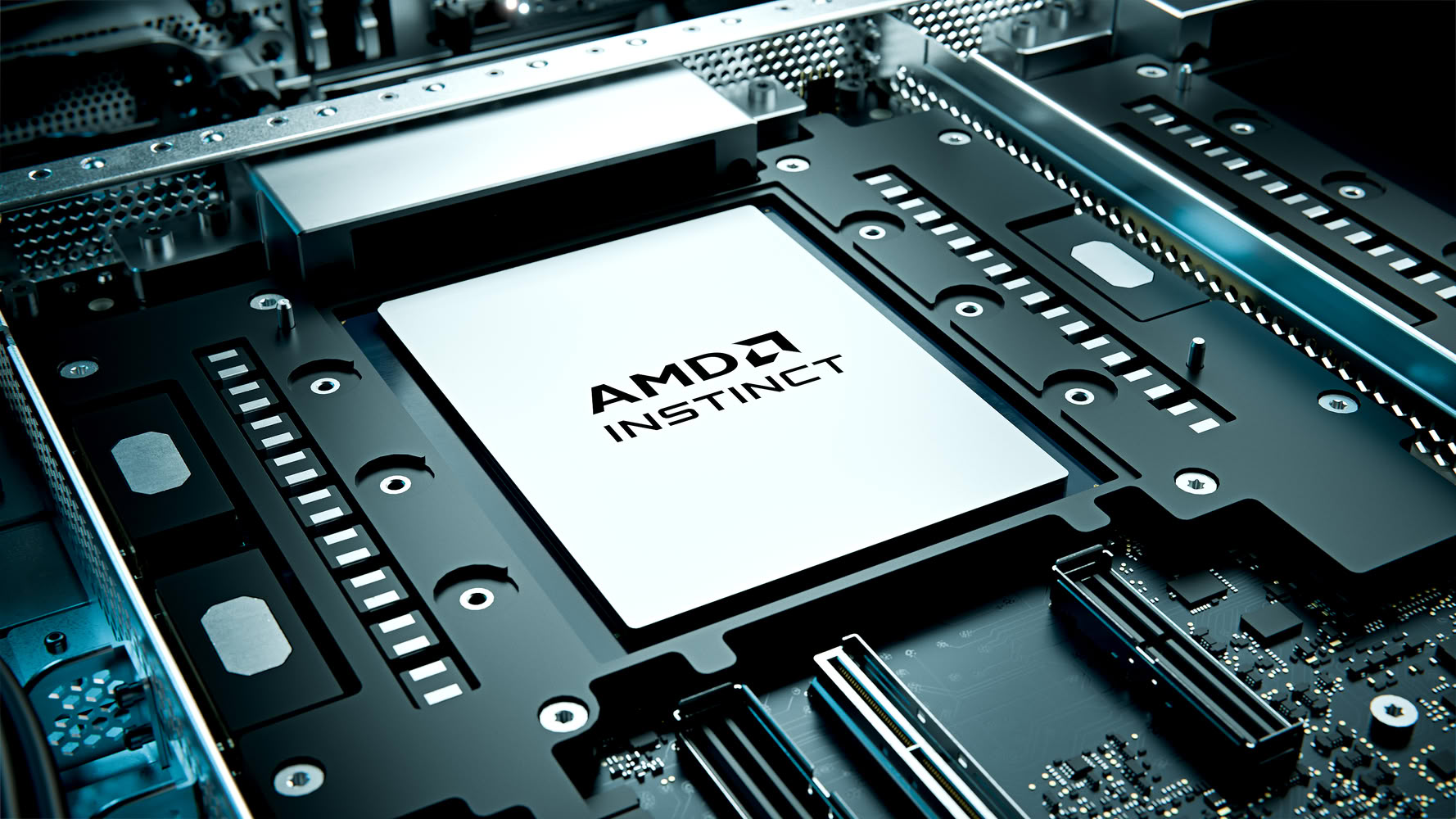
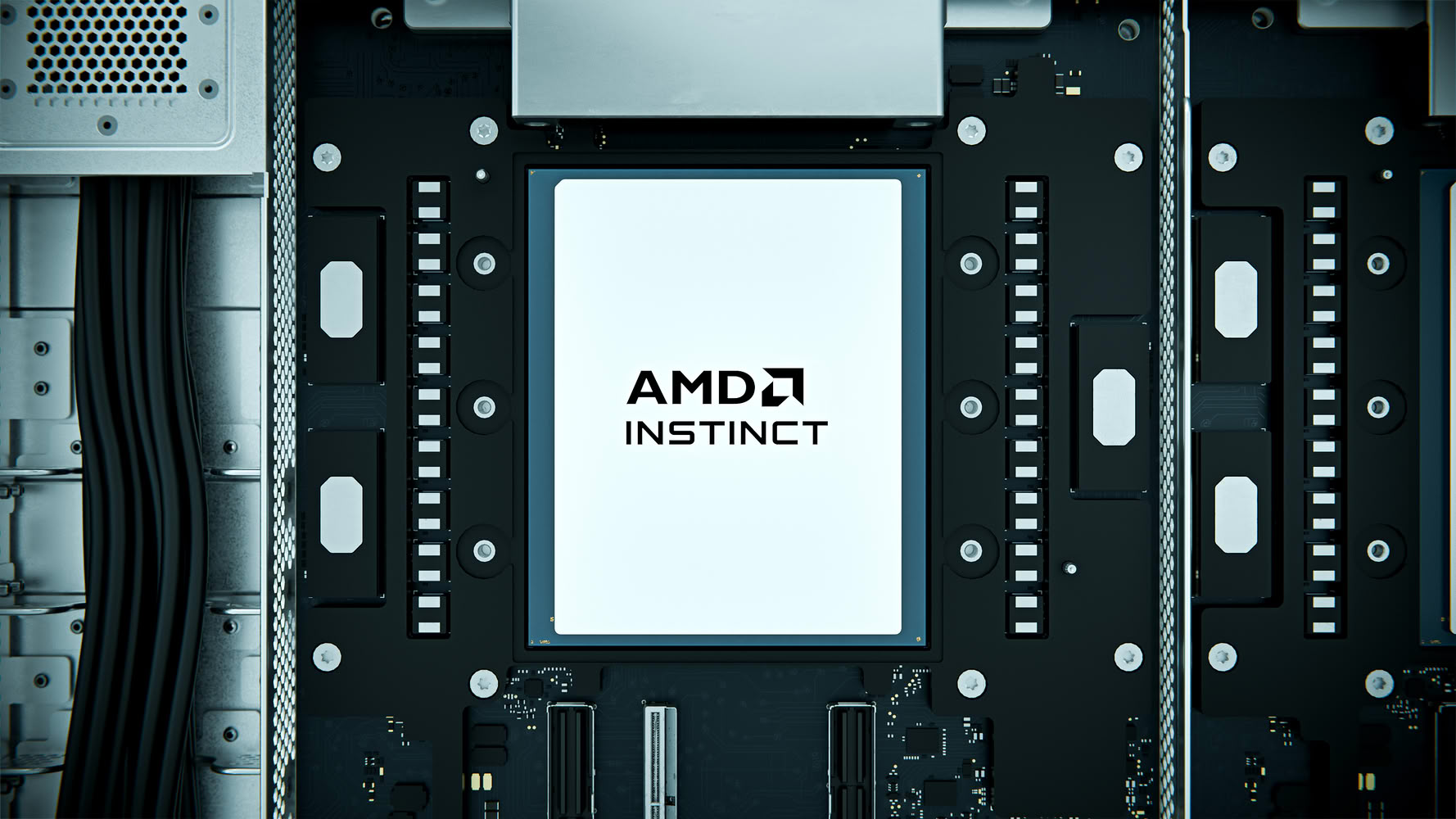
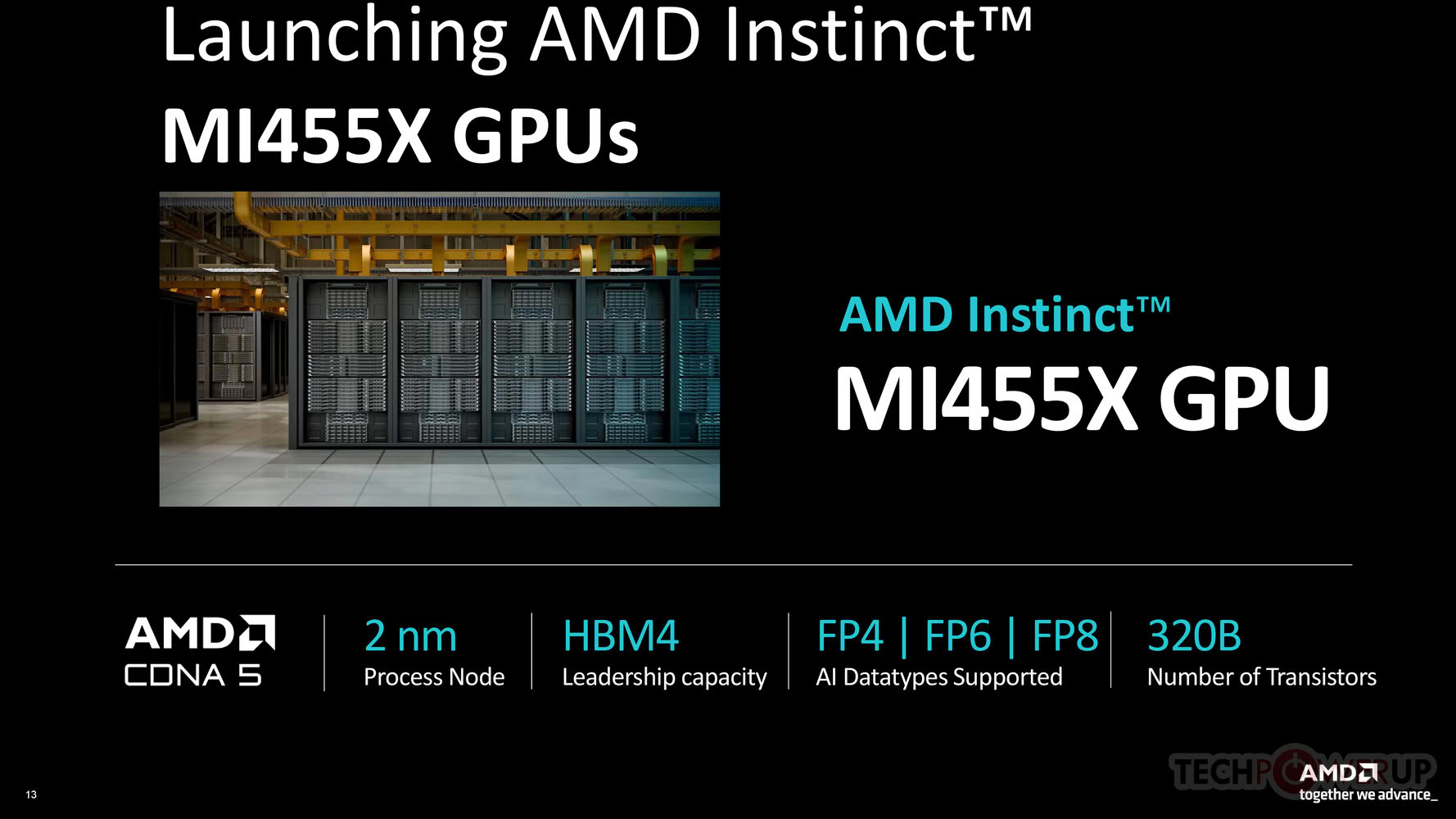
At its Advancing AI 2026 keynote, AMD introduced the Instinct MI400 Series, a new generation of data center GPUs, alongside the Helios rack-scale solution and the groundbreaking CDNA 5 architecture. Marking a significant technological leap, CDNA 5 is AMD’s first GPU architecture built on the advanced 2 nm process node. The flagship Instinct MI455X features an impressive 320 billion transistors in a multi-chiplet package and is equipped with 432 GB of HBM4 memory. While designed for data center compute workloads rather than gaming, several innovations in CDNA 5 hint at the direction of AMD’s future unified gaming and compute architectures.
Instinct MI400 Series: MI455X and MI430X for AI and HPC
The Instinct MI400 Series is divided into two main products: the Instinct MI455X, targeting frontier AI and large-scale AI factory deployments, and the Instinct MI430X, designed for sovereign AI and high-performance computing (HPC) applications. Together with the Helios rack, 6th Gen EPYC "Venice" CPUs, and AMD Pensando networking, these GPUs form AMD’s open alternative to NVIDIA’s Vera Rubin NVL72 platform.
Instinct MI455X: Pushing the Boundaries of Rack-Scale AI
The Instinct MI455X is AMD’s first GPU engineered specifically for rack-scale environments. The compute (XCD) chiplets utilize TSMC’s 2 nm gate-all-around process, while the FCD and MID chiplets are built on the 3 nm FinFET process. The package integrates eight XCD, two IOD, and two FCD dies, along with twelve stacks of HBM4 memory, totaling 320 billion transistors.
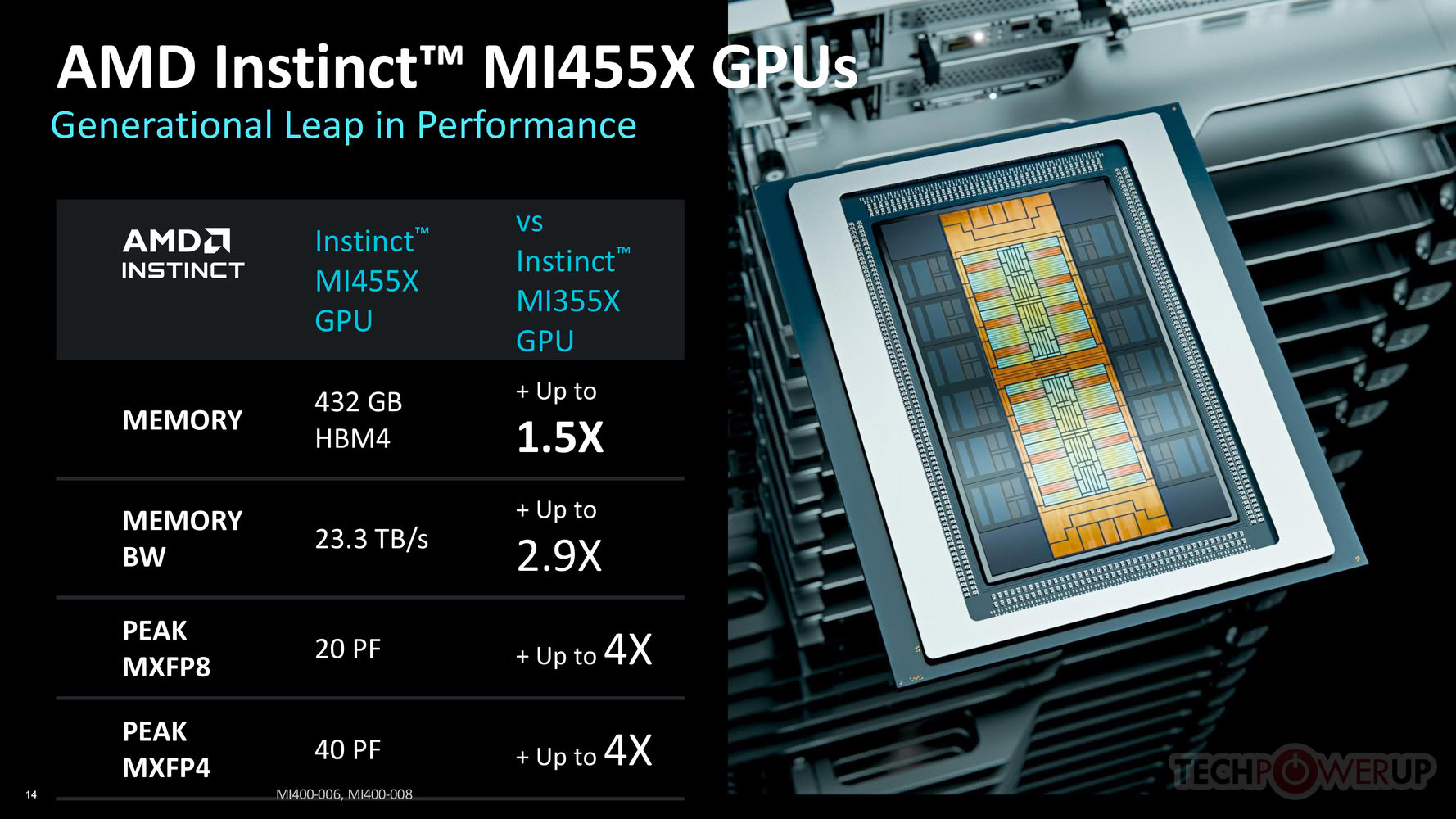
- Memory: 432 GB HBM4, delivering 23.3 TB/s bandwidth
- Compute: 20 PF peak MXFP8, 40 PF peak MXFP4; supports FP4, FP6, and FP8 data types
- Host Interface: 16-lane AMD Infinity Fabric, providing 256 GB/s bidirectional, hardware-coherent bandwidth to paired EPYC "Venice" CPUs
Compared to the previous-generation Instinct MI355X, the MI455X offers up to 4x peak compute, 2.9x memory bandwidth, and 1.5x memory capacity. These improvements translate to up to 18x higher token throughput and up to 34x lower token cost on DeepSeek V4 Flash FP4 serving. The 23.3 TB/s memory bandwidth surpasses earlier projections and edges out NVIDIA’s Vera Rubin VR200 system.
CDNA 5: Architectural Innovations for AI Efficiency
The efficiency gains in the MI455X stem from a range of architectural enhancements in CDNA 5, including larger caches, multicast memory operations, improved Tensor Data Movers, Wave32 execution, HBM4 memory integration, and the UALoE scale-up fabric. The architecture is optimized for a 72-GPU shared-memory pod, a significant shift from the traditional 8-GPU node, and a first for AMD Instinct.
Instinct MI430X: Precision for Sovereign AI and HPC
The Instinct MI430X is tailored for sovereign AI, national infrastructure, research institutions, and leadership-class HPC, where numerical accuracy is paramount. It delivers up to 288 TFLOPS of hardware-based FP64 performance for scientific computing and is designed for deployment in traditional mesh-based HPC topologies. The MI430X shares the MI400 Series’ HBM4 memory, advanced security features, and open ROCm software foundation.
AMD Helios: Open Rack-Scale AI Infrastructure
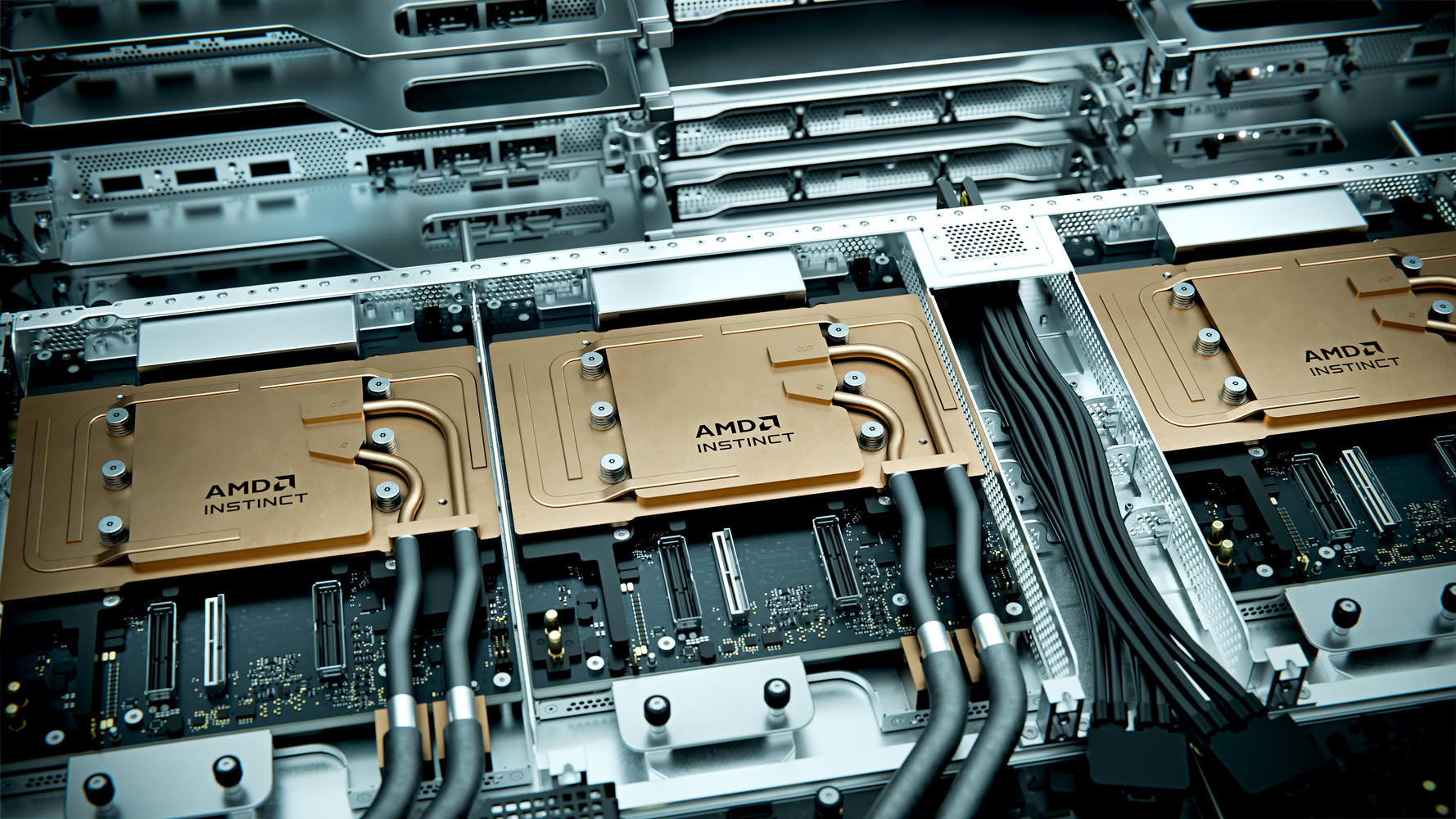
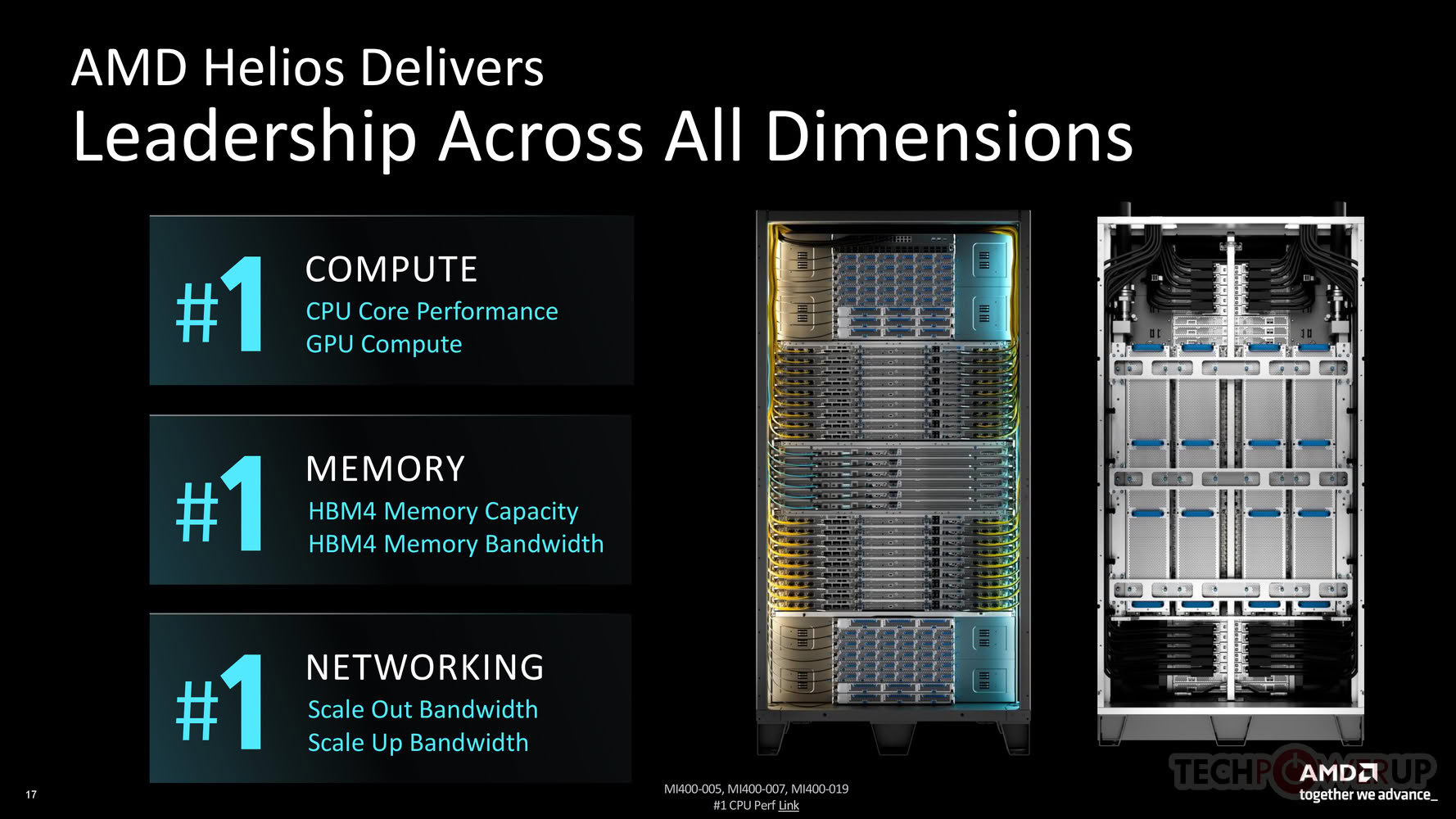
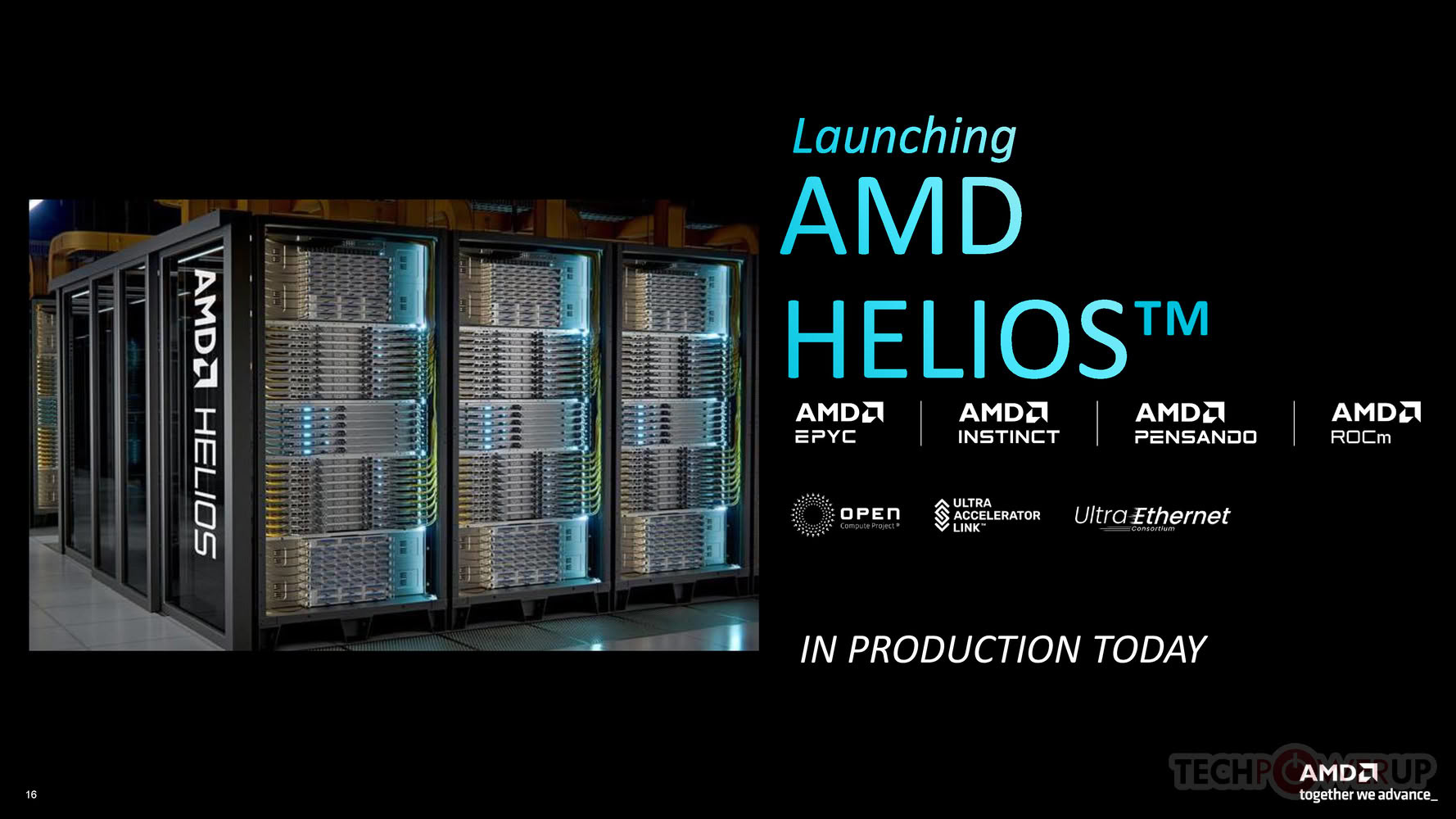
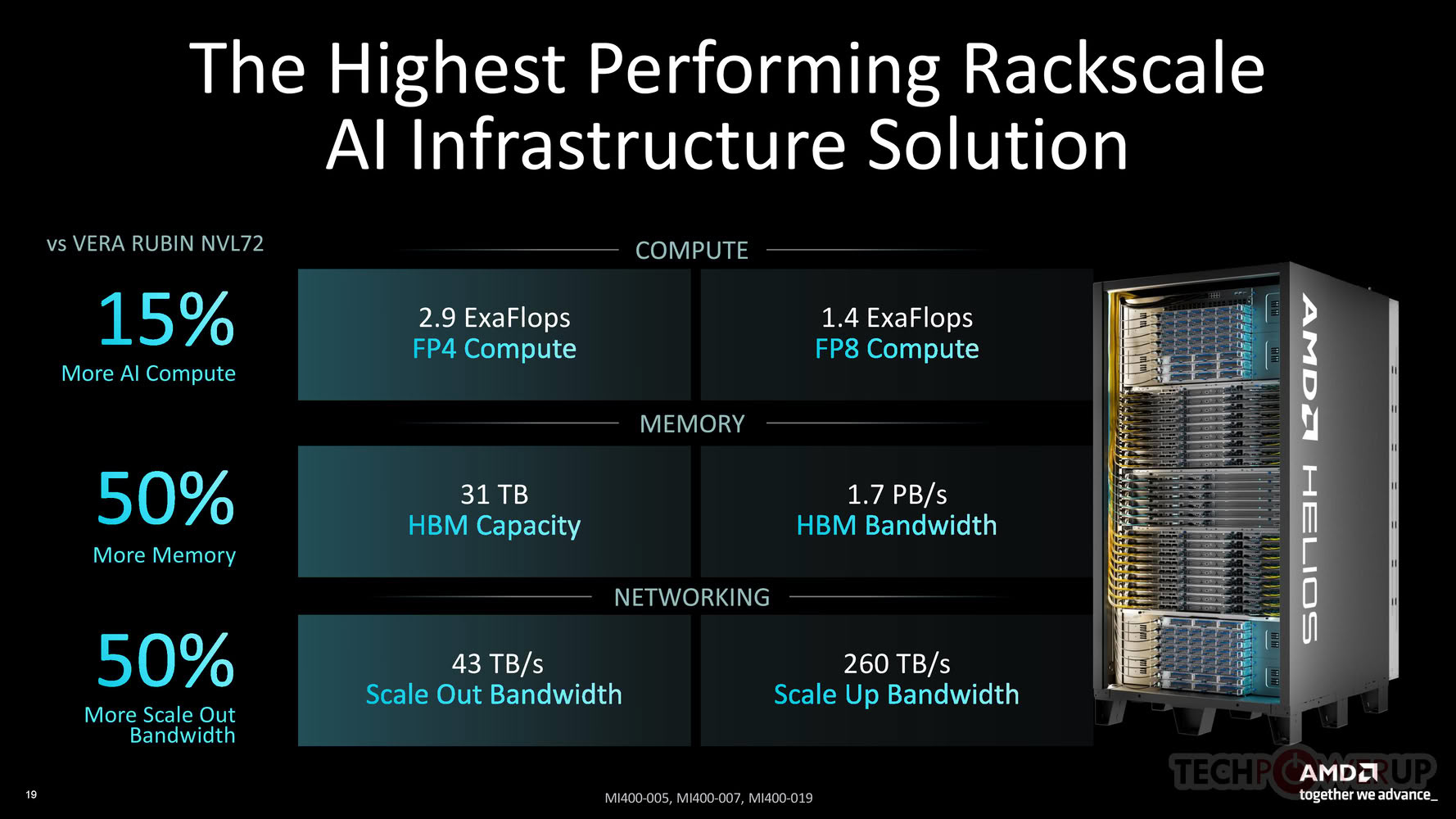
Helios represents AMD’s open, validated rack-scale blueprint, featuring 72 MI455X GPUs across 18 open-rack, four-GPU compute trays, paired with EPYC 9006 SP7 "Venice" CPUs and AMD Pensando networking. Key specifications per rack include:
- 2.9 ExaFLOPS peak FP4 and 1.4 ExaFLOPS peak FP8 performance
- 31 TB of HBM4 capacity and 1.7 PB/s of memory bandwidth
- 260 TB/s scale-up bandwidth (via UALink over Ethernet, "UALoE") and 43 TB/s scale-out bandwidth
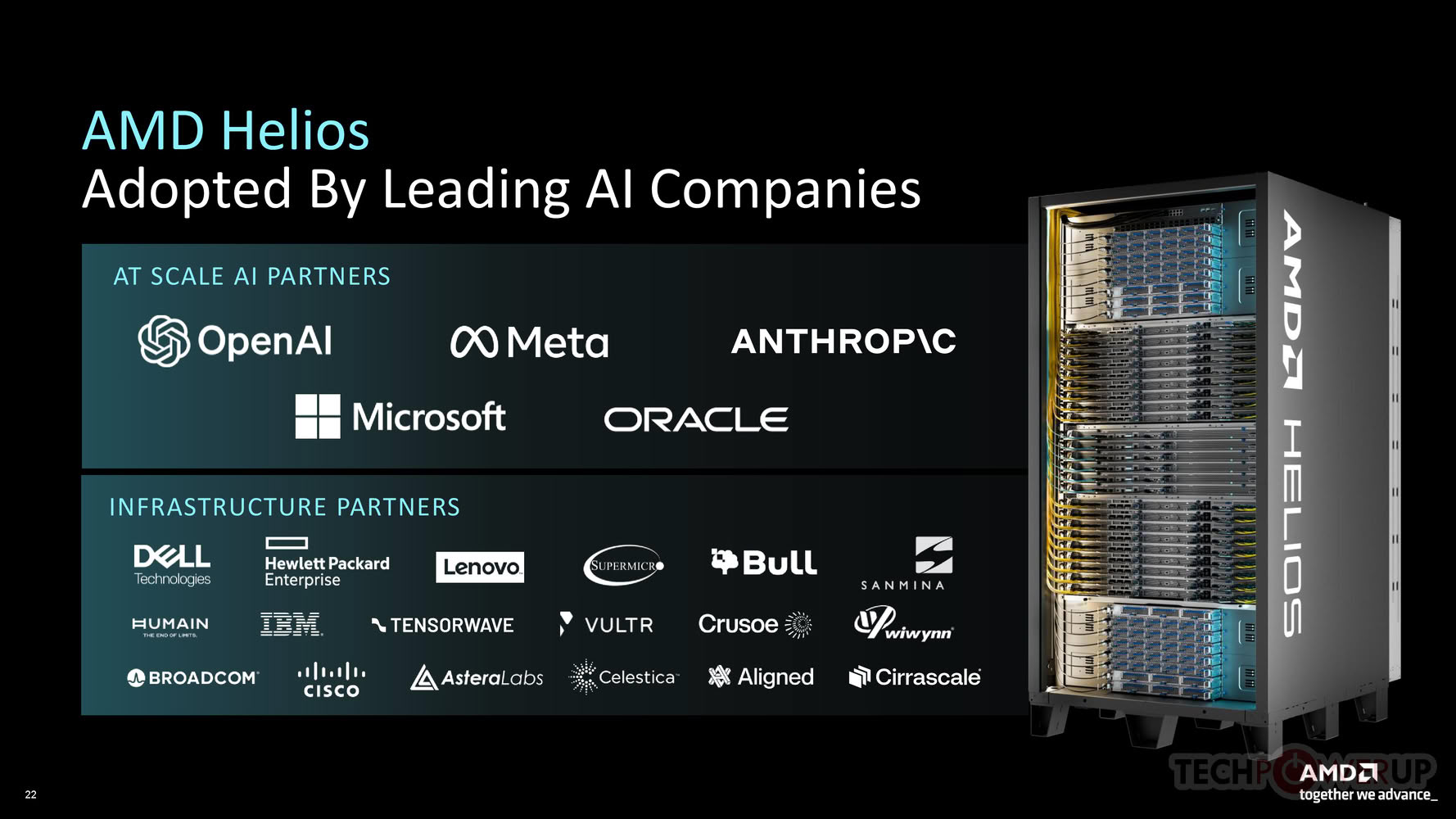
Compared to NVIDIA’s Vera Rubin NVL72, AMD claims Helios delivers 15% higher peak FP4 performance, 50% more HBM capacity, 6% greater HBM bandwidth, 50% higher scale-out bandwidth, and up to 30% more tokens per dollar. Helios is already in production, with major adopters including OpenAI, Meta, Anthropic, Microsoft, and Oracle.
ROCm.ai: Next-Generation AI Software Stack
Alongside its hardware announcements, AMD introduced ROCm.ai, an AI-native developer experience designed to streamline AI workload deployment and optimization. Key components include:
- ROCm CLI: A unified command-line interface for installing, validating, serving, and troubleshooting AI workloads, including support for air-gapped environments.
- AMD Skills: AMD-authored expertise integrated into leading AI coding assistants such as Claude, Cursor, Codex, and Gemini, providing developers with AMD-specific guidance.
- Hyperloom: An open-source agentic system that automates end-to-end inference optimization, reducing processes that previously took weeks to just hours.
- FlyDSL: A Pythonic domain-specific language for writing GPU kernels, enabling Python developers to achieve low-level performance without manual GPU coding.
AMD reports that ROCm.ai delivers an average 3.3x improvement in inference and 2.4x in training over ROCm 7 on the same hardware. The platform supports over 3 million Hugging Face models out-of-the-box, natively integrates with top open-source AI projects, and has seen a tenfold increase in open-source contributions. ROCm.ai will be available starting August 2026.
Client-Side AI: "Gorgon Halo" and Ryzen AI Mini-PC Evolution
On the client side, AMD previewed "Gorgon Halo," the successor to its Strix Halo / Ryzen AI MAX platform, which powers the latest generation of compact AI mini-PCs. Gorgon Halo extends unified memory from 128 GB to 192 GB and increases local model support from 200 billion to 300 billion parameters, enabling desktop-class systems to run cloud-scale AI models locally. AMD also highlighted its upcoming Ryzen AI 400 mobile series, expanded its partnership with Hugging Face (including native "Halo" support and a year of Hugging Face Pro with every Halo box), and announced a collaboration with Cisco for secured deskside AI solutions. These developments illustrate how AMD’s data center AI technologies are making their way into prosumer and enthusiast desktop systems.