AMD Unveils 6th Gen EPYC "Venice" Server Processors with Zen 6 Architecture
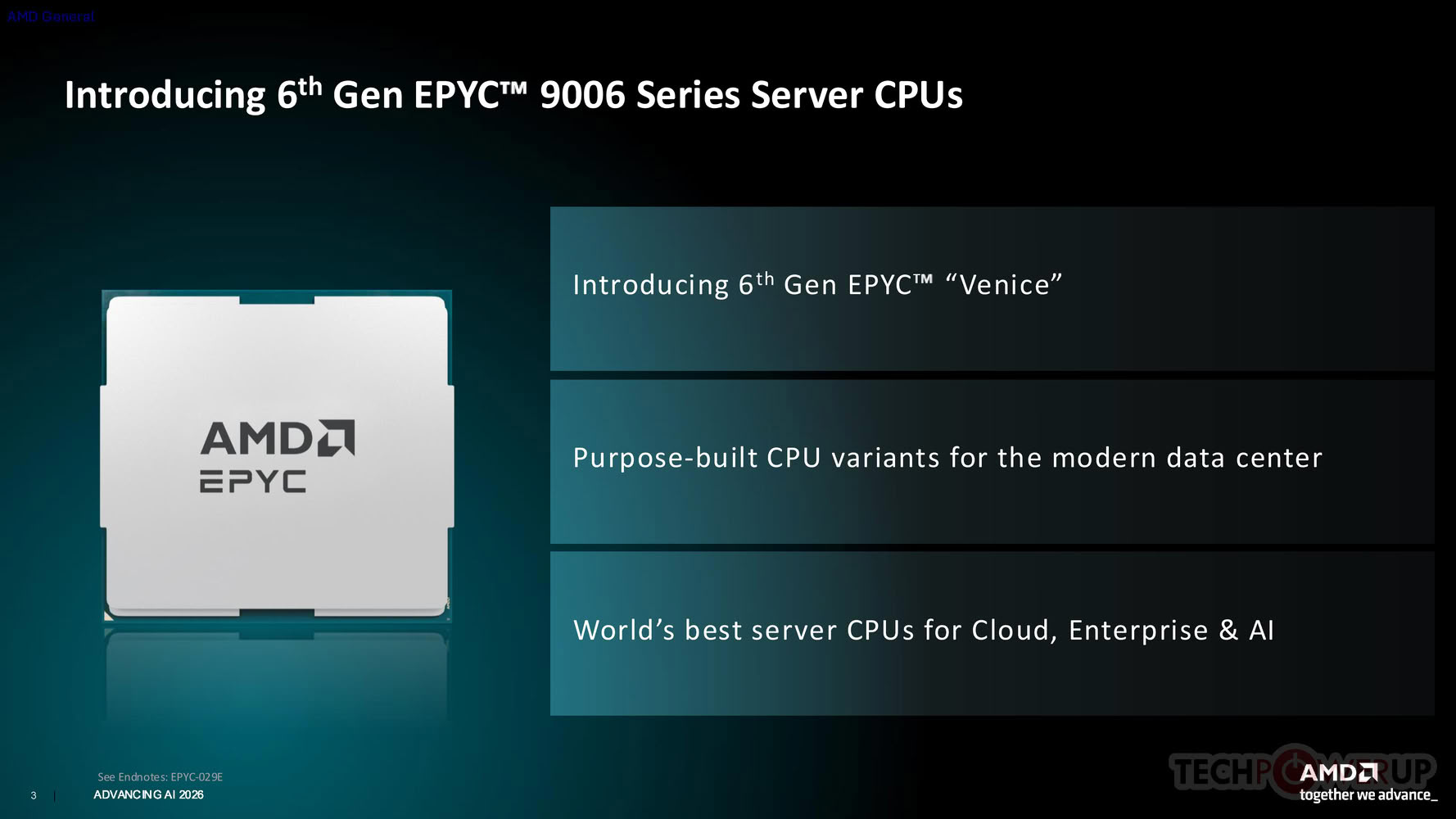
AMD has officially introduced its 6th Generation EPYC "Venice" server processors, built on the advanced "Zen 6" CPU microarchitecture. This new lineup is designed to address a wide range of enterprise and data center needs, offering significant improvements in performance, efficiency, and scalability.
Diverse Product Lines for Varied Workloads
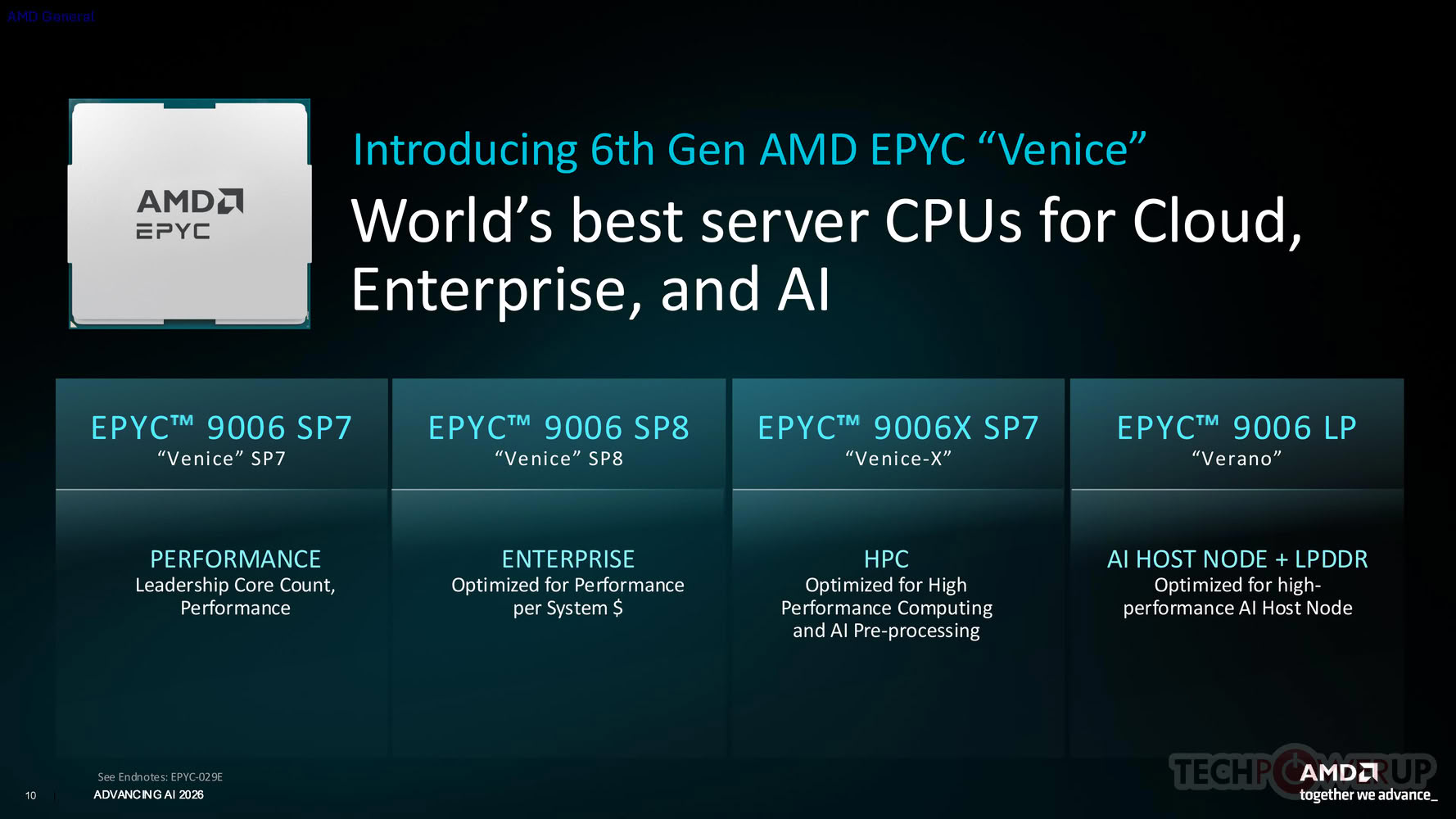
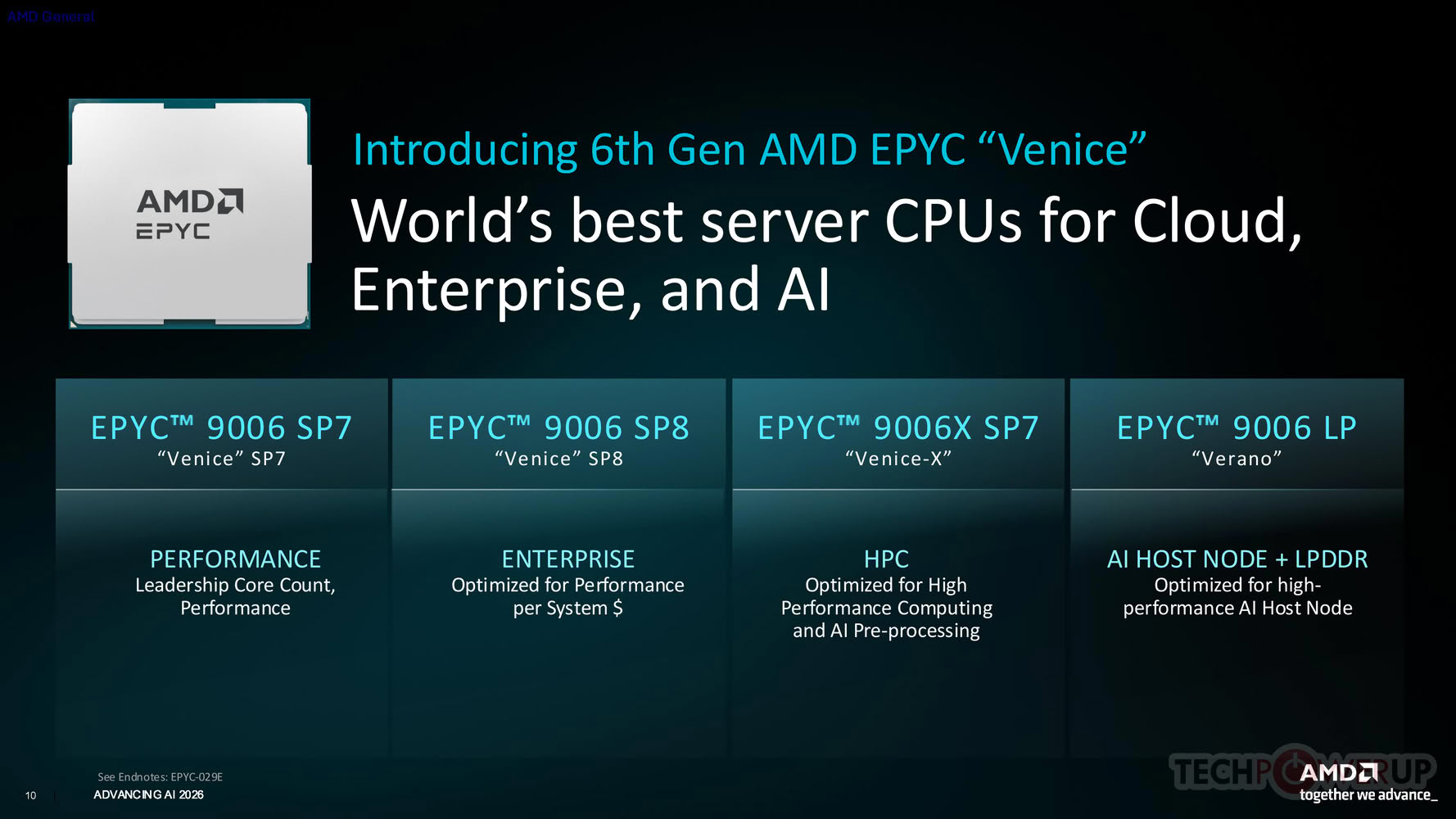
The EPYC 9006 "Venice" family is segmented into four distinct product lines:
- EPYC 9006 (Socket SP7): Targeted at mainstream servers, these processors lead the market in core counts and overall performance.
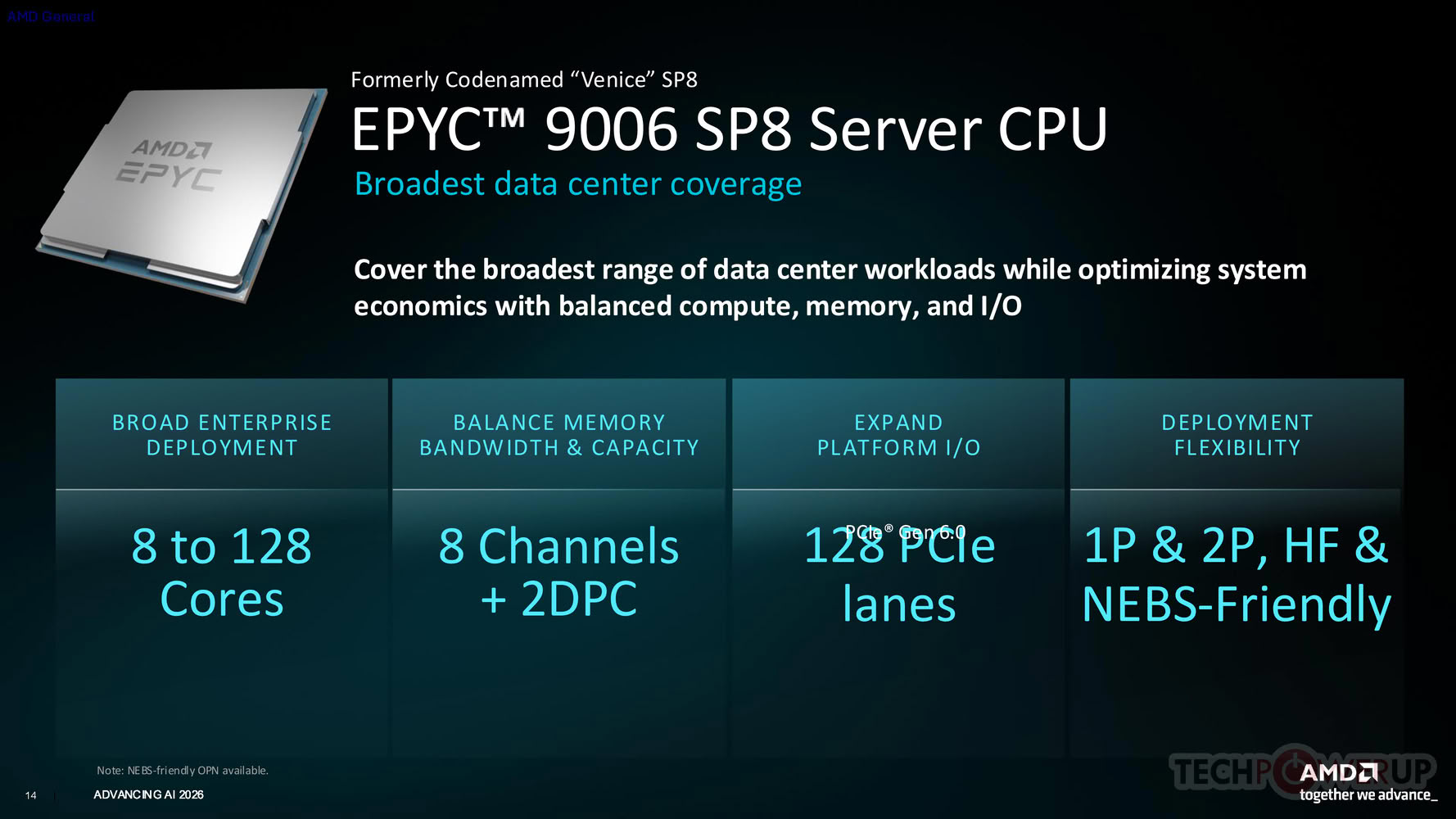
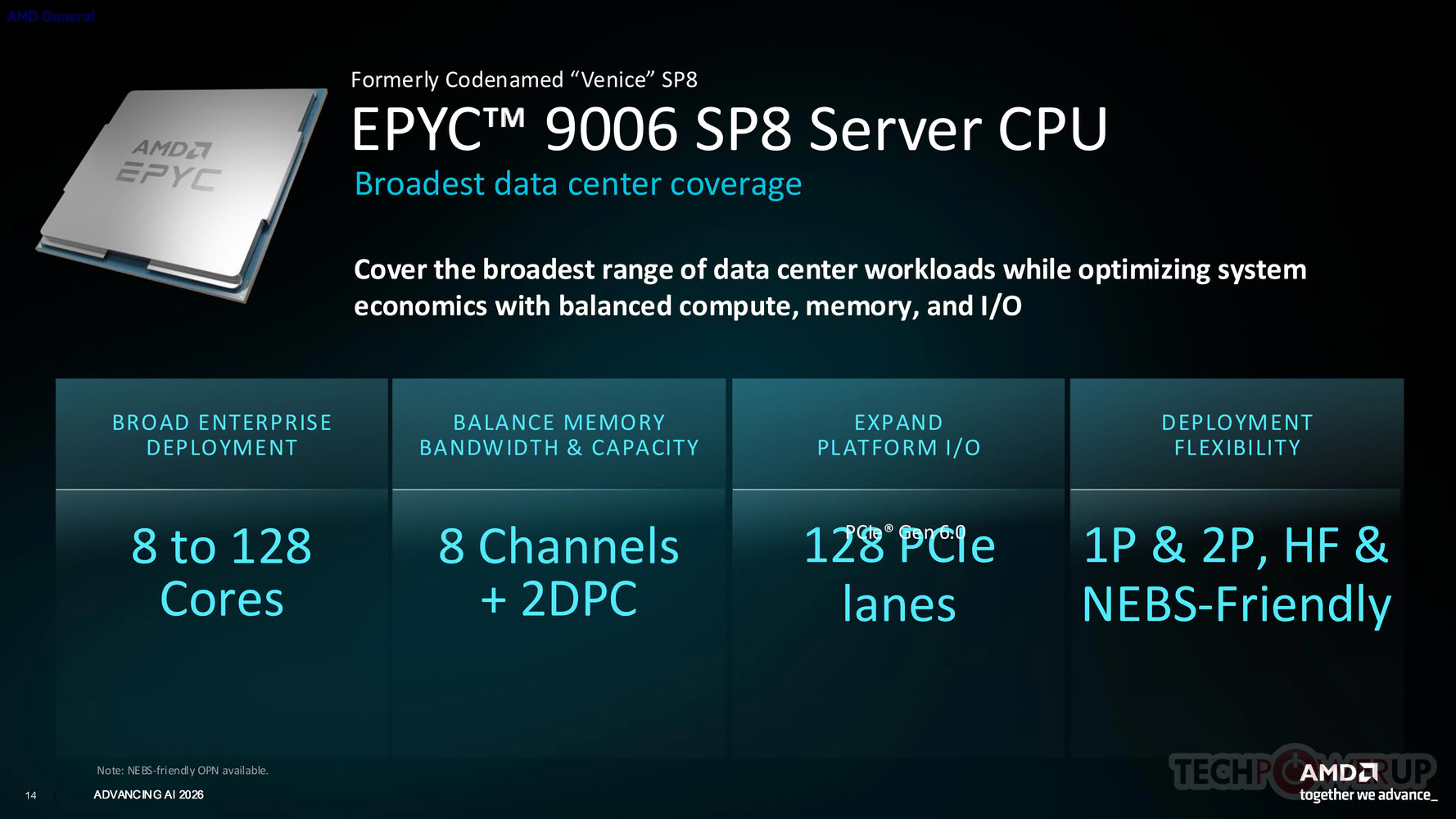
- EPYC 9006 (Socket SP8): Optimized for enterprises seeking the best performance per node.
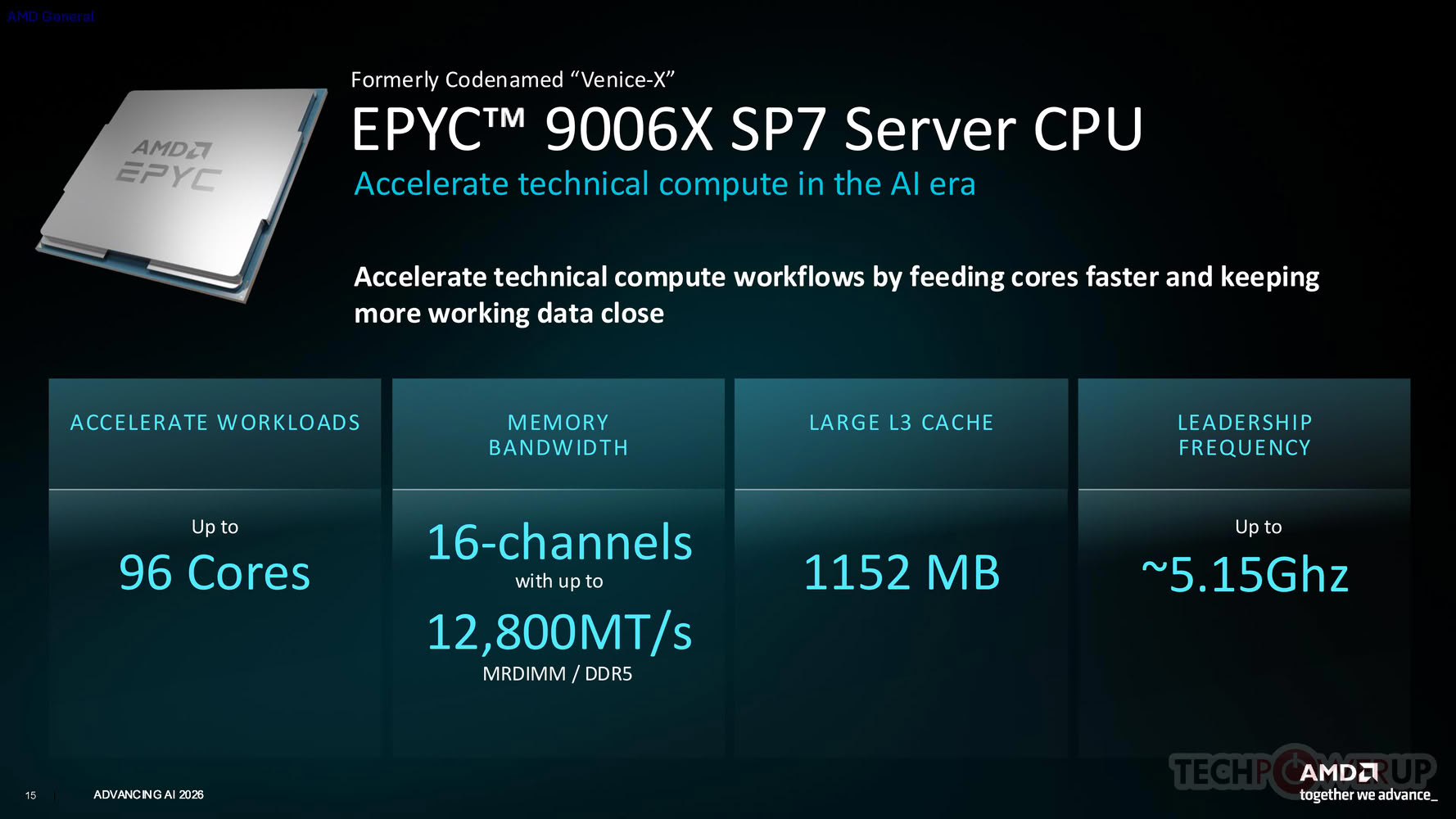
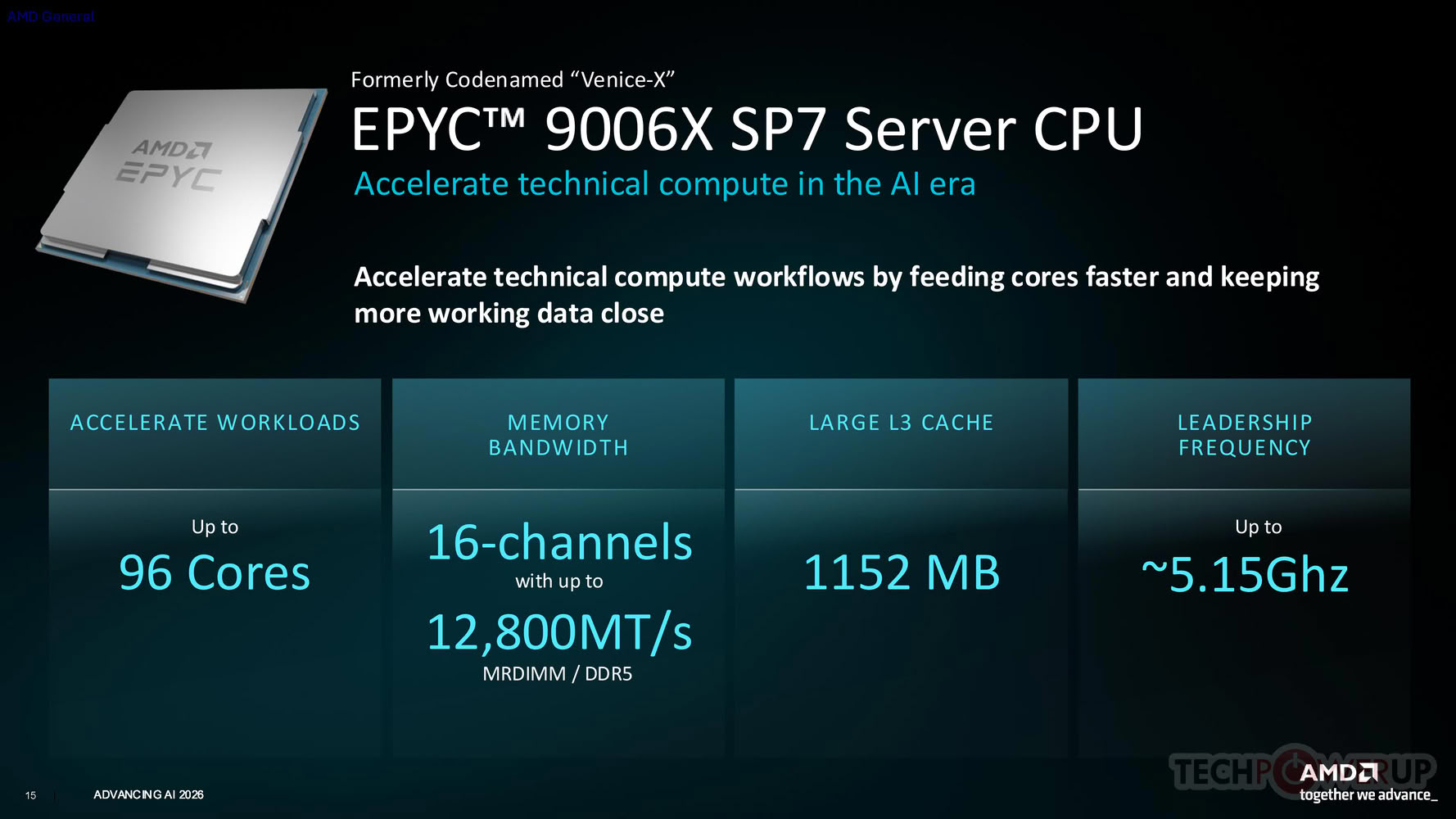
- EPYC 9006X SP7: Designed for high-performance computing (HPC), these chips feature expanded CPU caches for accelerated workloads.
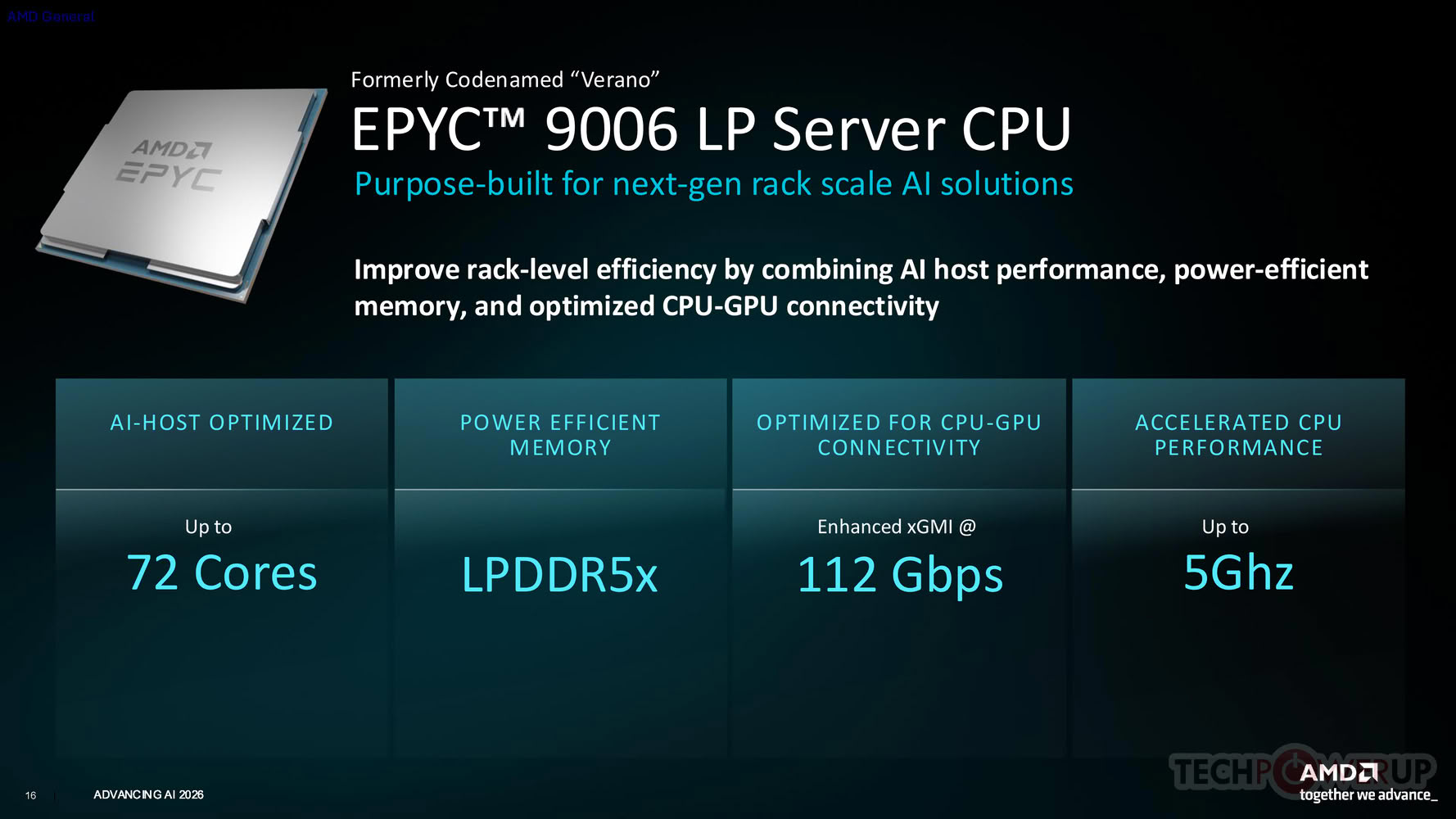
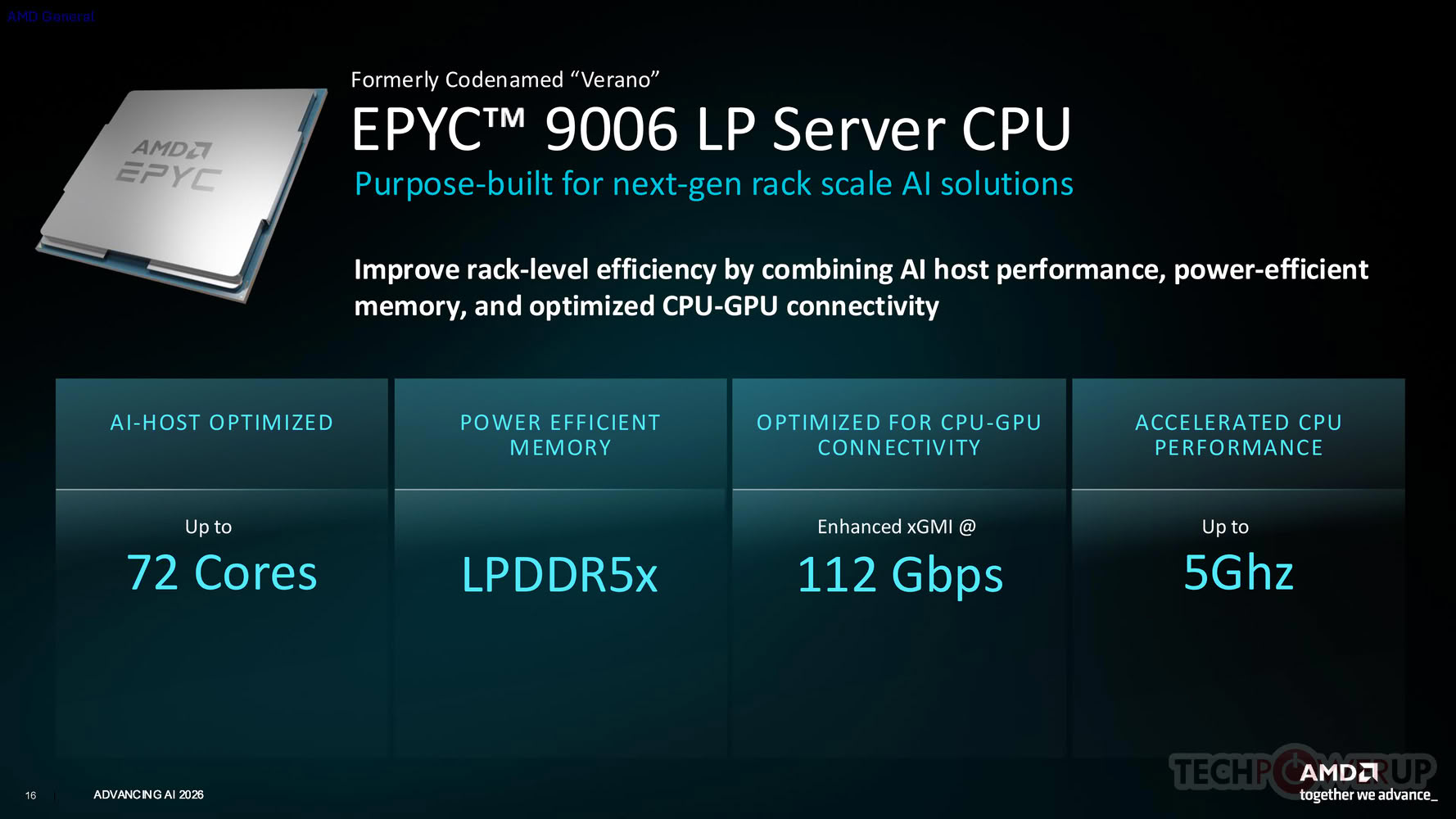
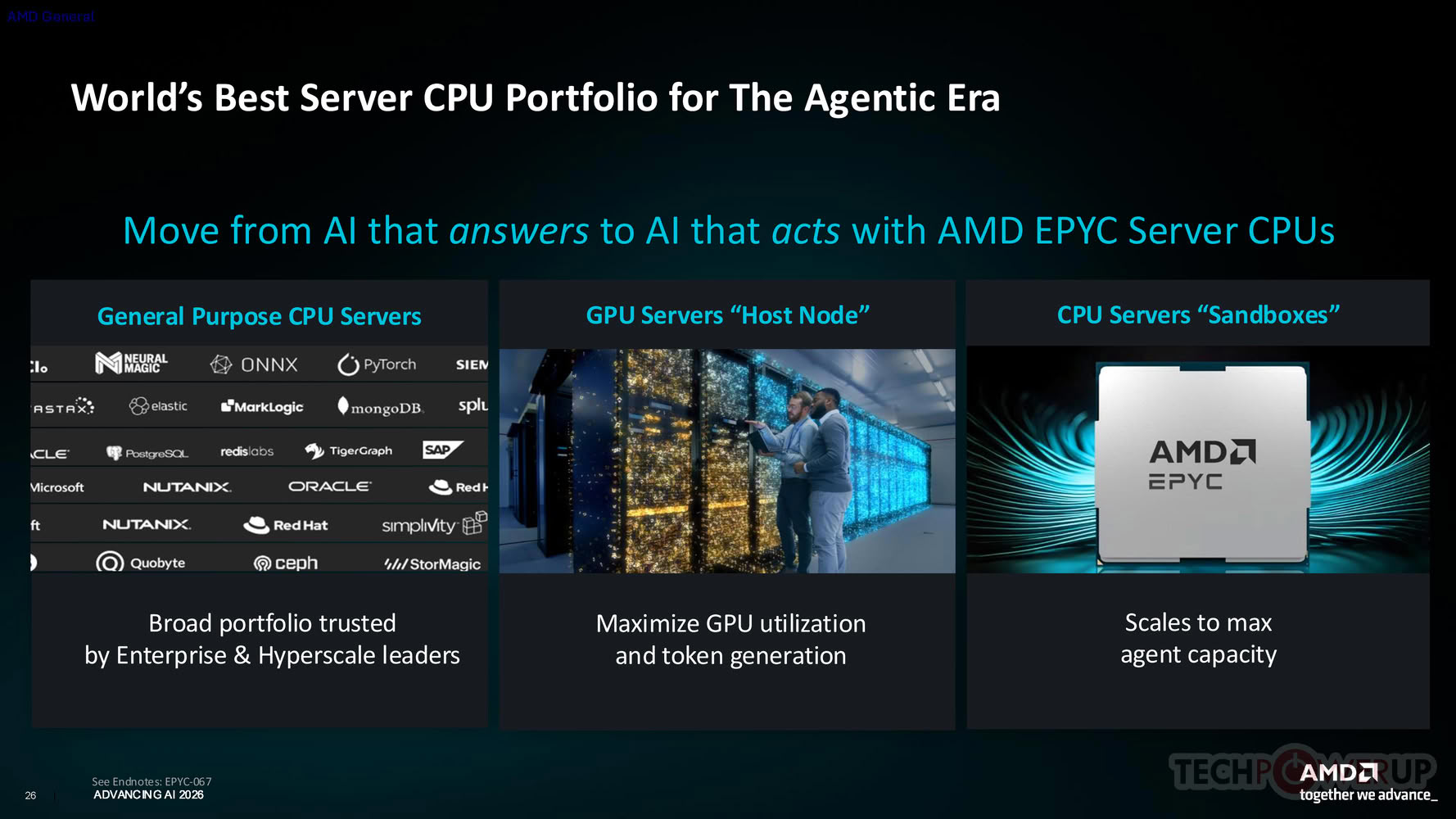
- EPYC 9006 LP "Verano": Tailored for AI host nodes, these processors utilize LPDDR memory for enhanced efficiency.
Unprecedented Core Counts and Memory Bandwidth
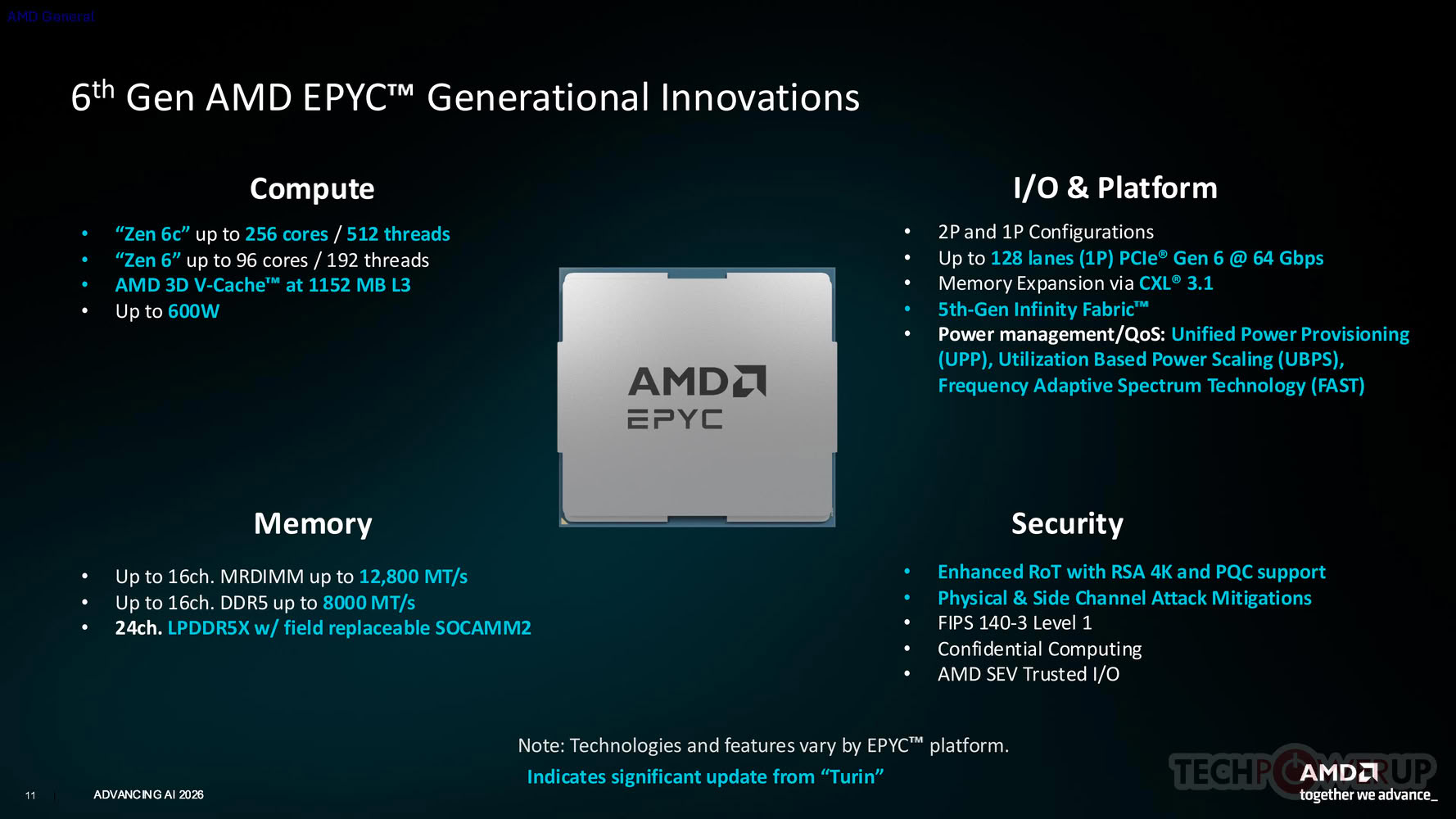
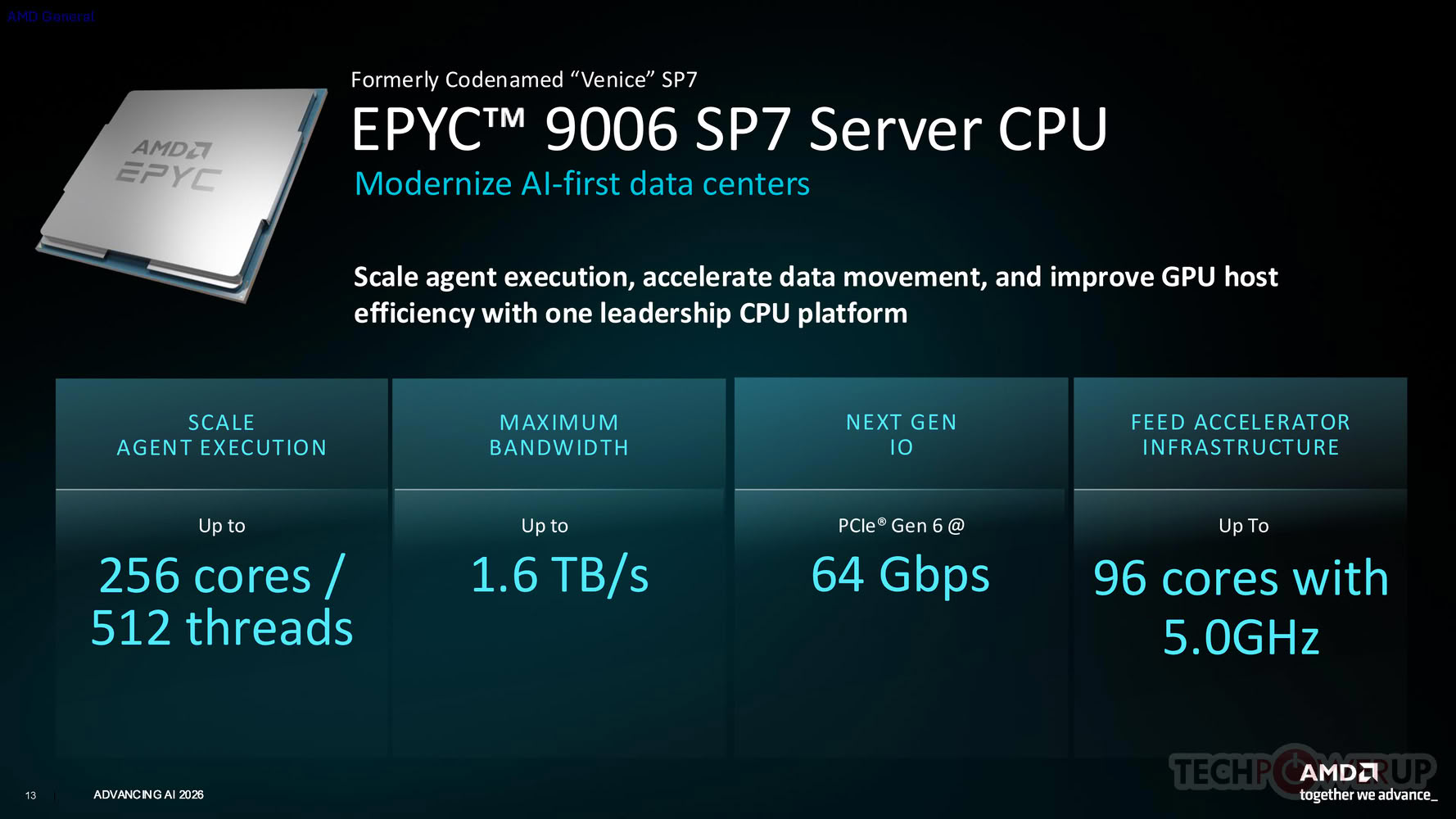
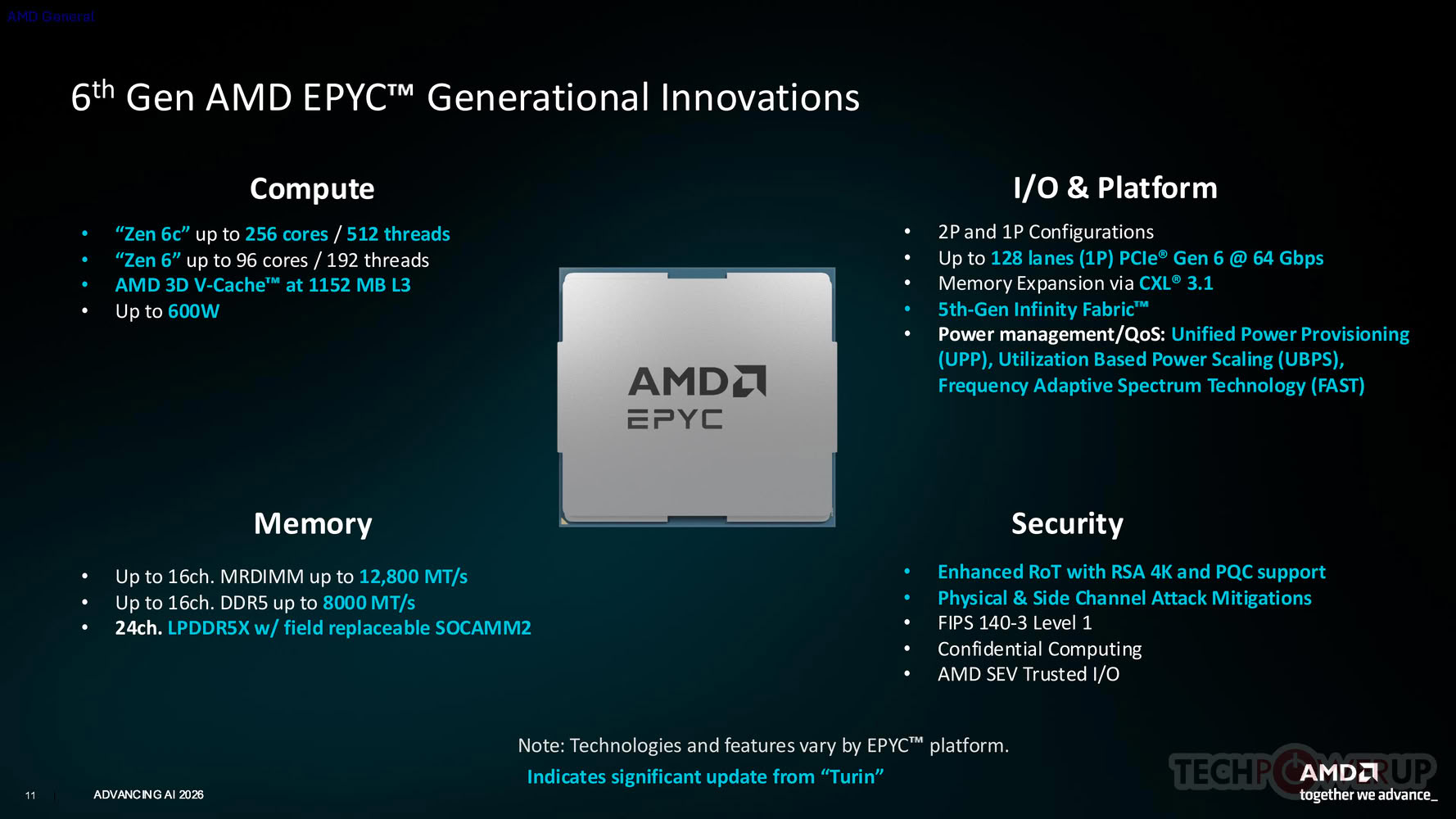
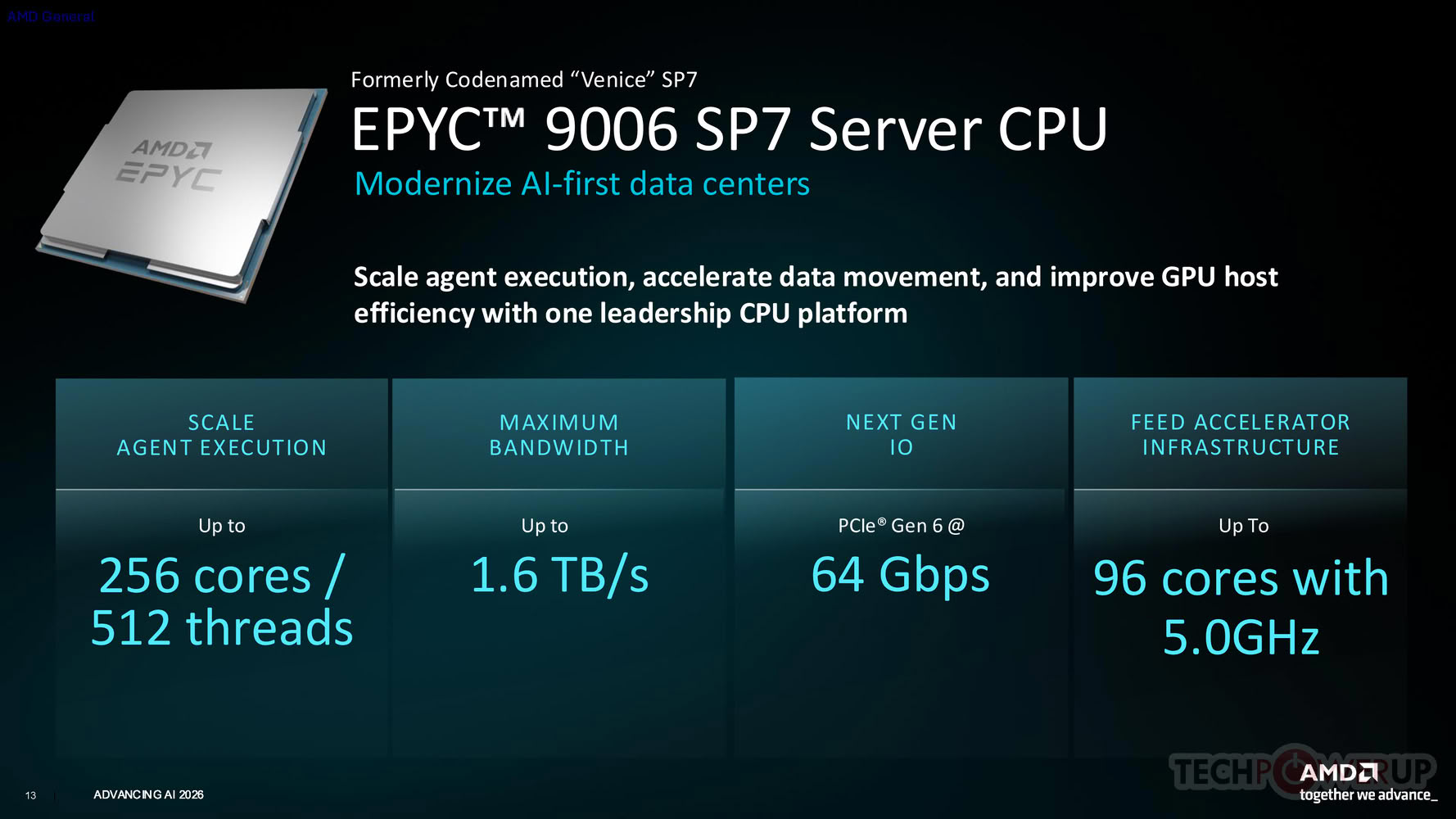
The new EPYC "Venice" processors offer up to 96 cores and 192 threads per chip with standard "Zen 6" cores, and up to 256 cores and 512 threads with the compact "Zen 6c" cores. The "Venice-X" HPC variants leverage 3D V-Cache technology, delivering up to 1,152 MB of L3 cache per socket for demanding computational tasks.
AMD has made significant advancements in memory architecture. Socket SP7 supports a 16-channel DDR5 memory interface with native DDR5-8000 RDIMM support, and MRDIMMs with speeds up to DDR5-12800. Select models also feature a 24-channel LPDDR5X interface, compatible with field-replaceable SOCAMM2 modules, providing exceptional memory bandwidth for data-intensive applications.
Advanced Platform Features and Connectivity
EPYC "Venice" processors support both single-socket (1P) and dual-socket (2P) configurations. Each socket delivers 128 PCI Express Gen 6 lanes, enabling high-speed connectivity for storage, networking, and accelerators. The platform also supports memory expansion via CXL 3.1 and integrates AMD’s 5th Gen Infinity Fabric for improved interconnect performance.
New power management and quality-of-service (QoS) features have been introduced, including unified power provisioning (UPP), utilization-based power scaling (UBPS), and frequency-adaptive spectrum technology (FAST). These enhancements provide administrators with greater control over power efficiency and workload optimization.
Enhanced Security and Reliability
Security remains a top priority for AMD. The "Venice" series incorporates advanced security features at both the Zen 6 microarchitecture and server processor levels. These include enhanced Root of Trust (RoT), RSA 4K encryption with post-quantum cryptography (PQC) support, and mitigations against emerging physical and side-channel attacks. These measures help ensure data integrity and system resilience in modern data center environments.
Production Timeline and Availability
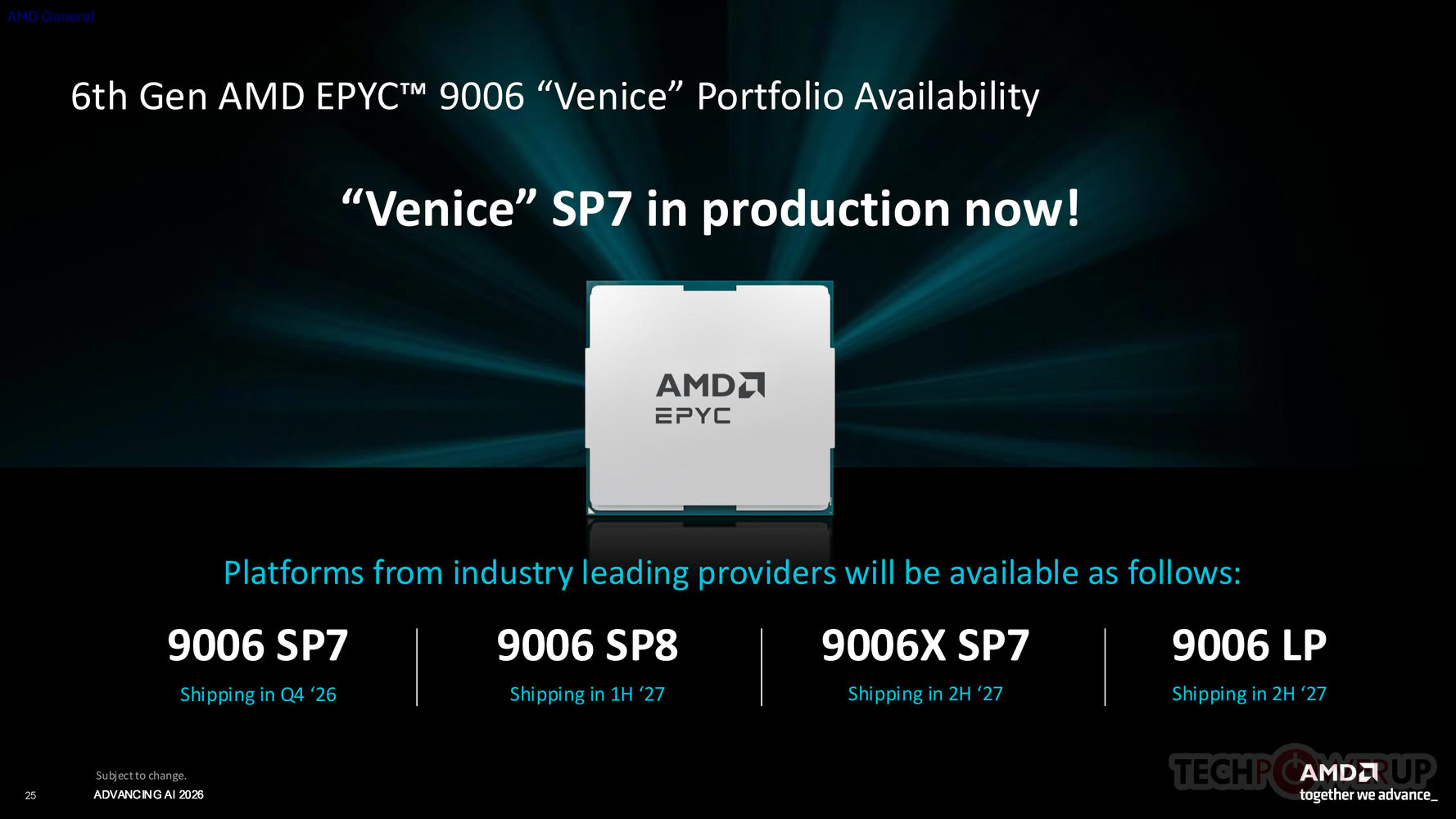
The AMD EPYC "Venice" series is currently in production. The EPYC 9006 SP7 processors are scheduled to ship in Q4 2026, with the SP8 series following in the first half of 2027. The high-performance 9006X SP7 and 9006 LP "Verano" processors are expected in the second half of 2027.
Performance Leadership and Competitive Advantages
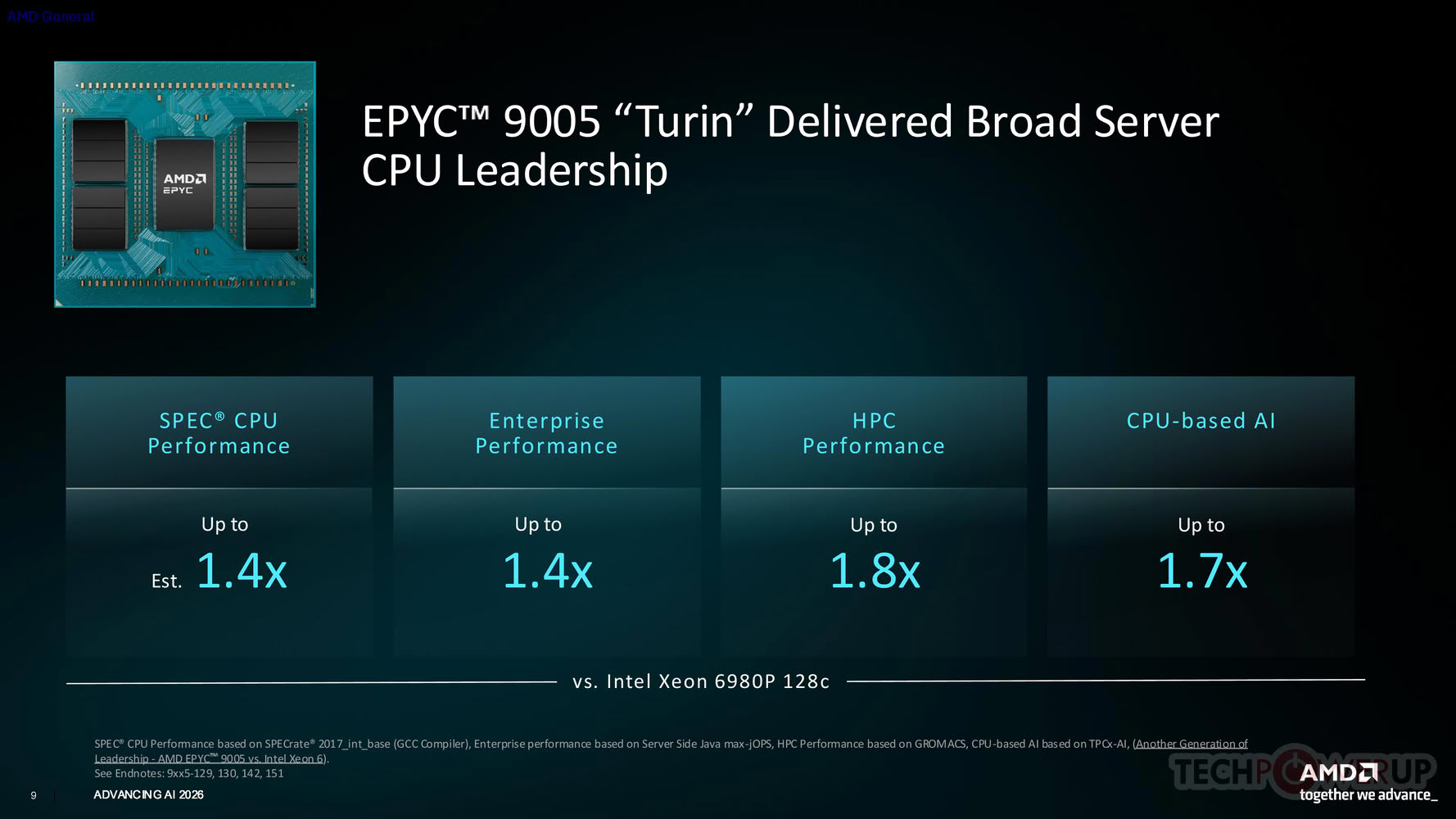
Leveraging the improved instructions-per-clock (IPC) of Zen 6 cores, wider 16-channel DDR5 memory interfaces, and support for DDR5-8000 memory, the EPYC "Venice" processors deliver substantial performance gains over competing solutions from Intel and Arm.
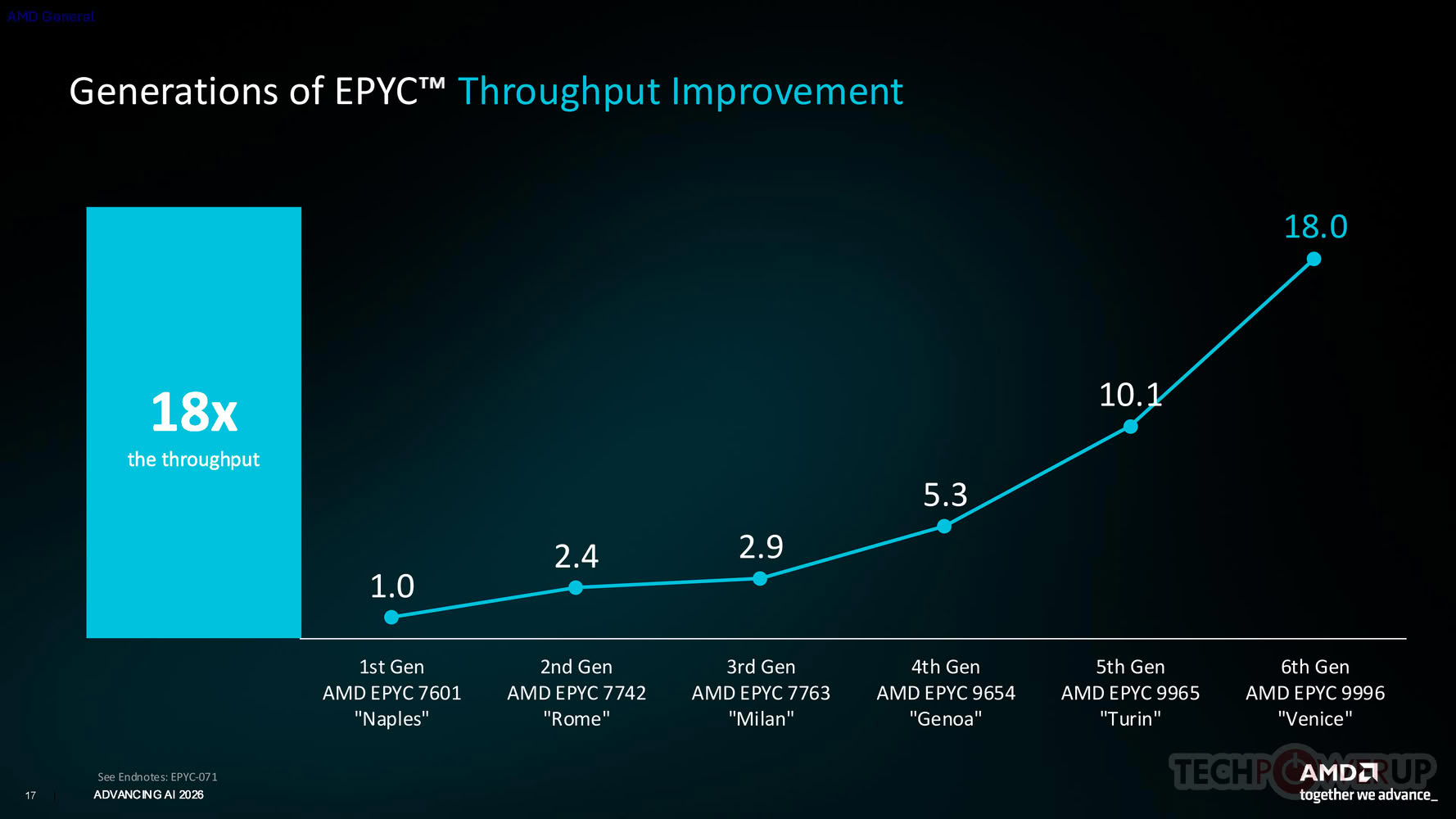
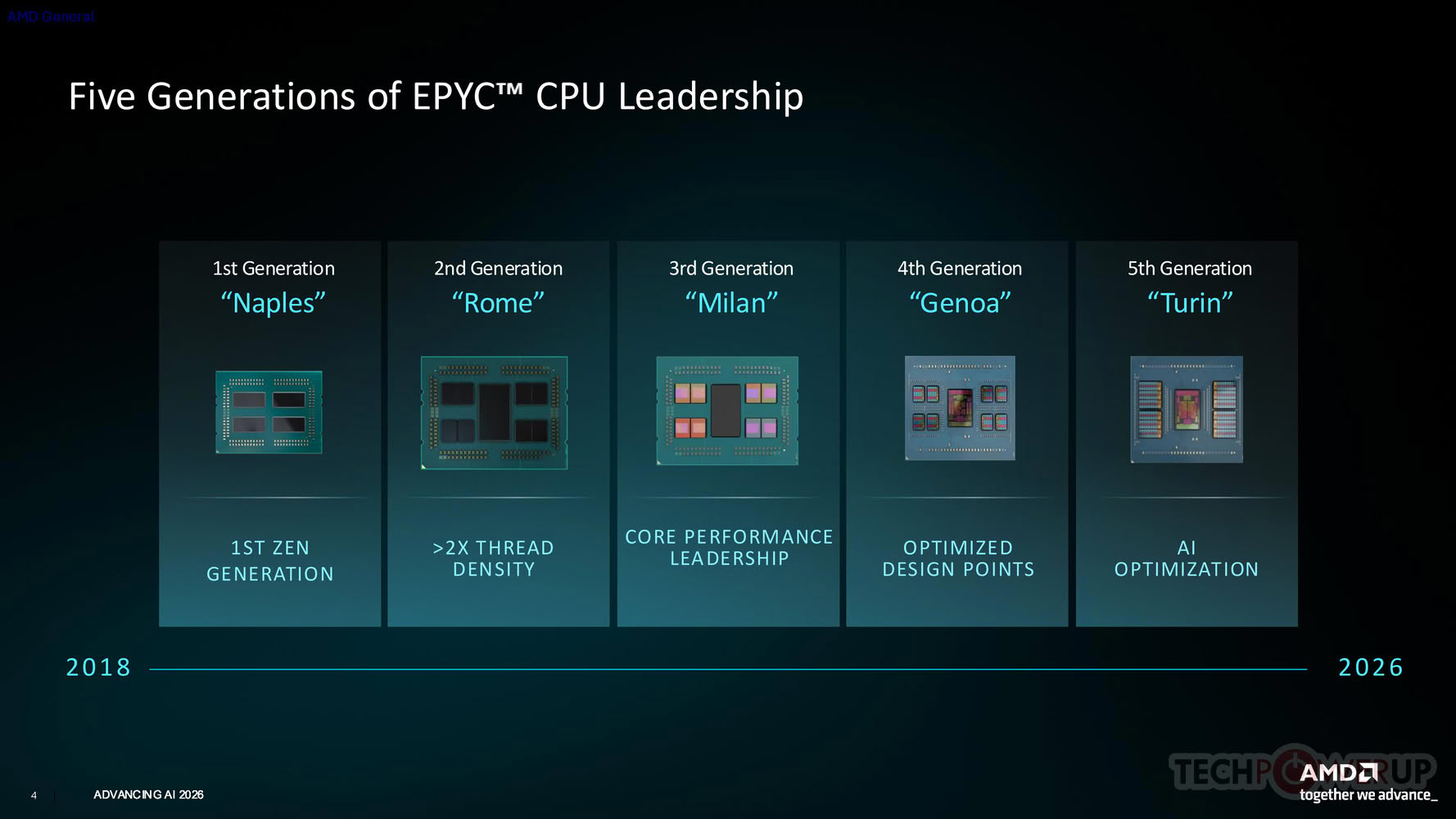
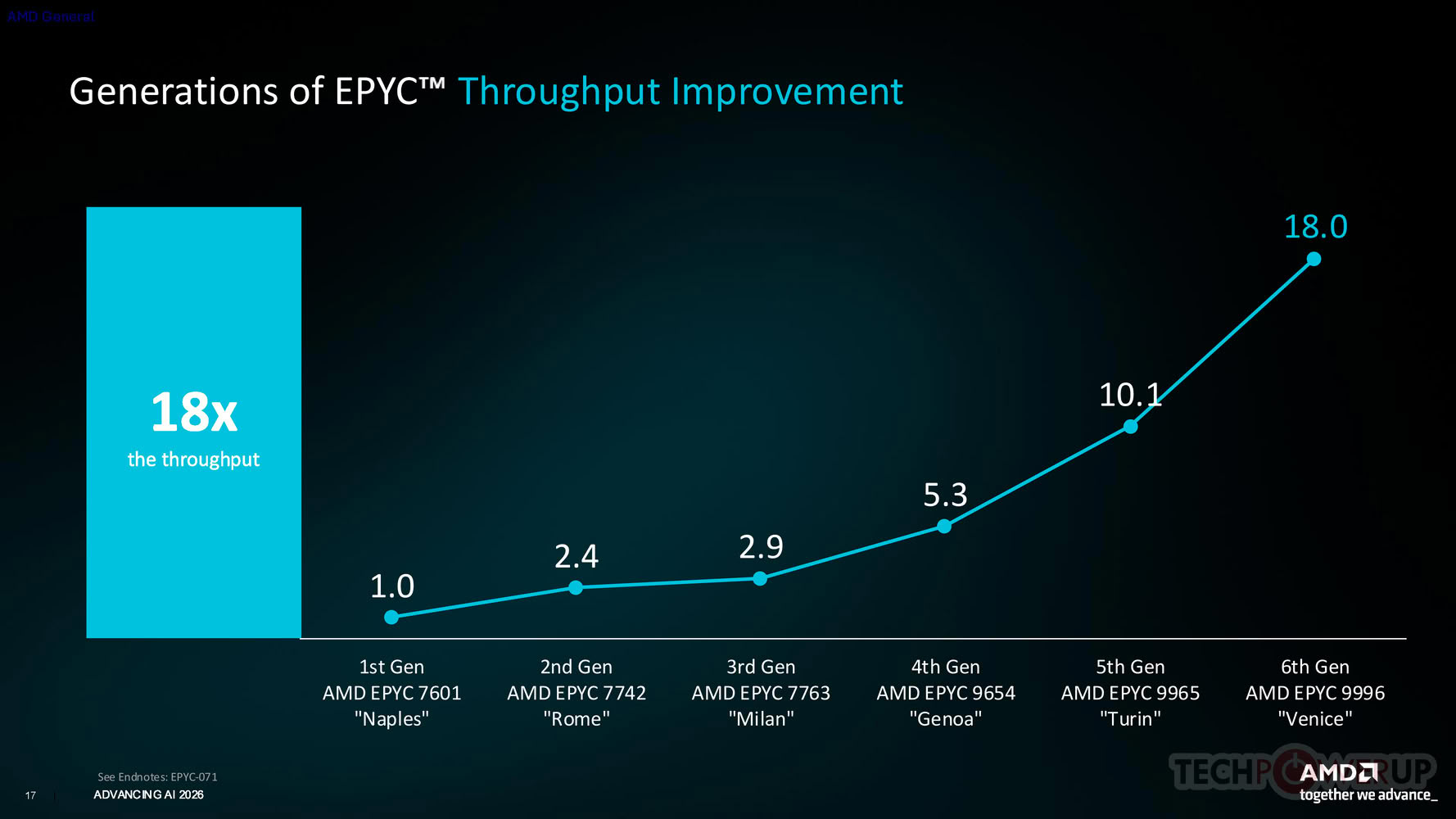
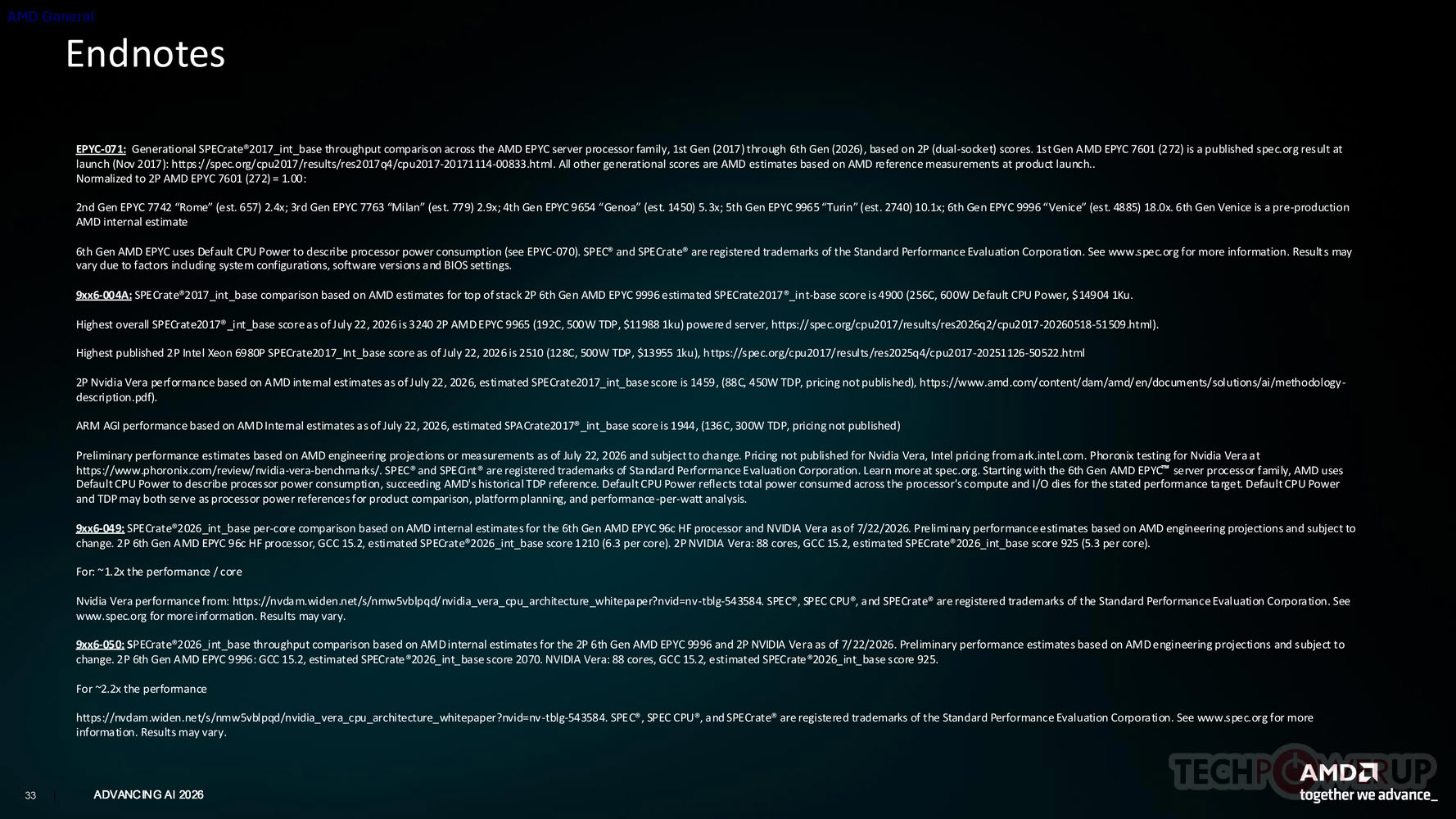
- Throughput: Up to 18x the throughput of the first-generation EPYC "Naples" 7601.
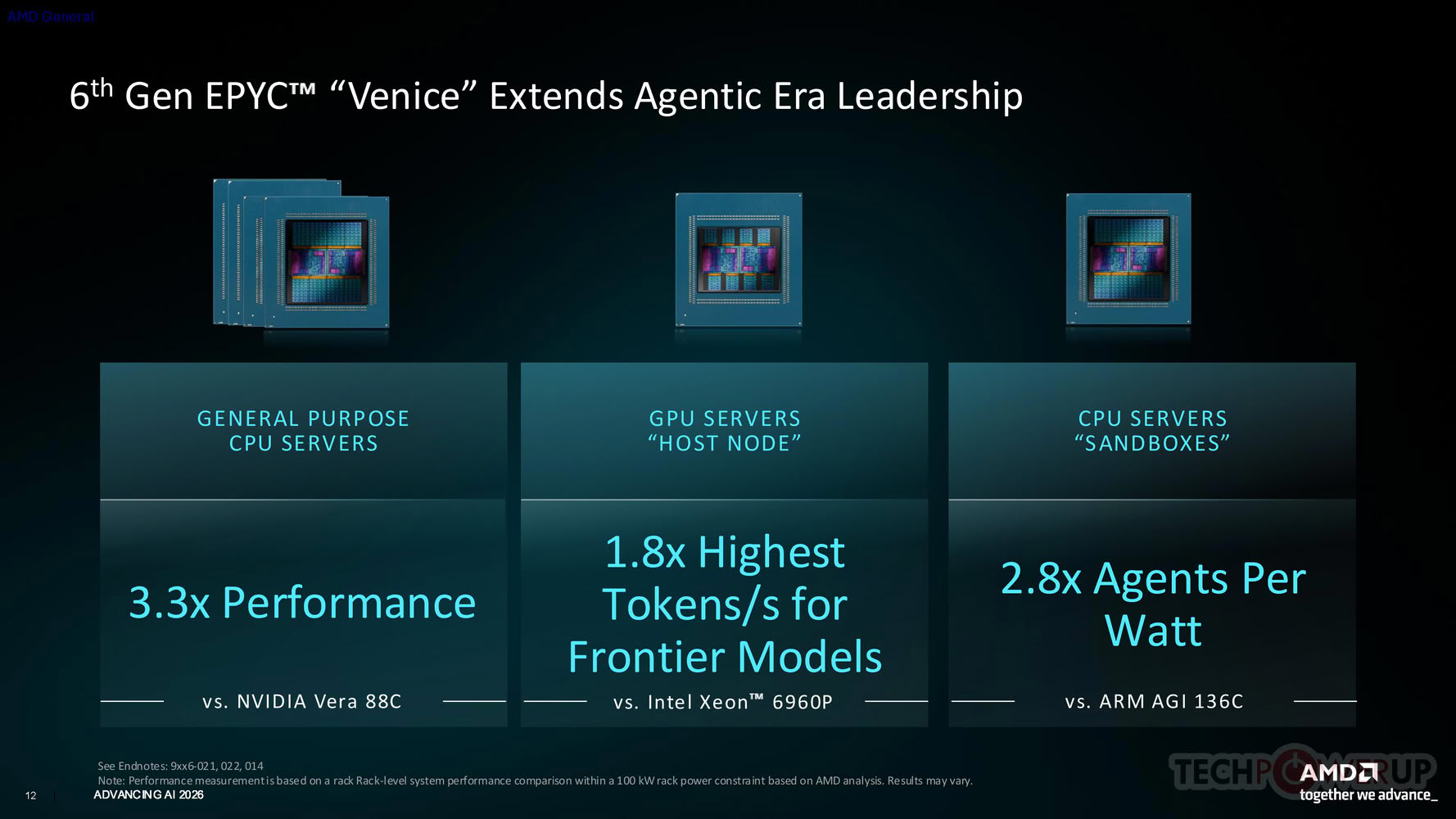
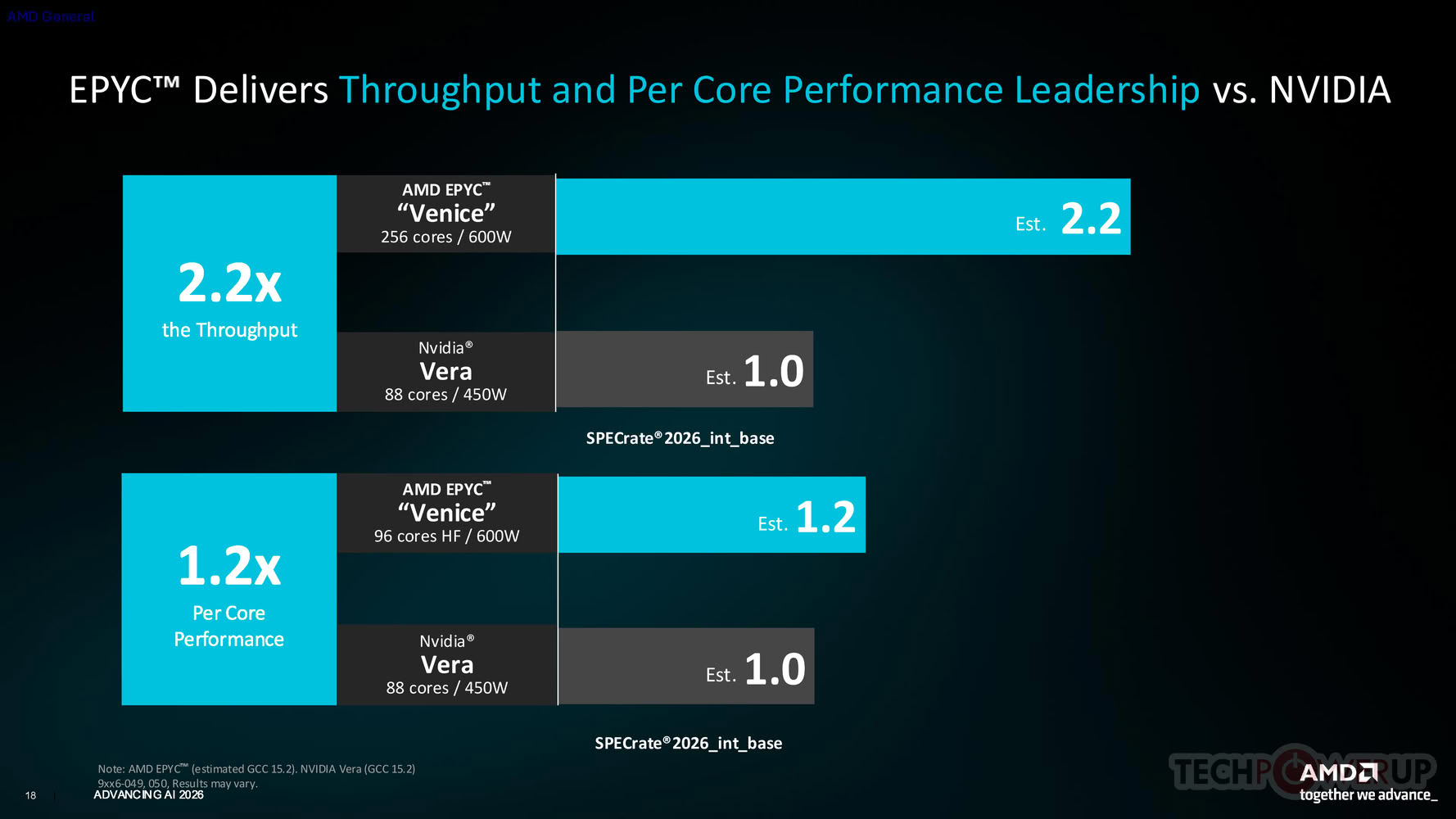
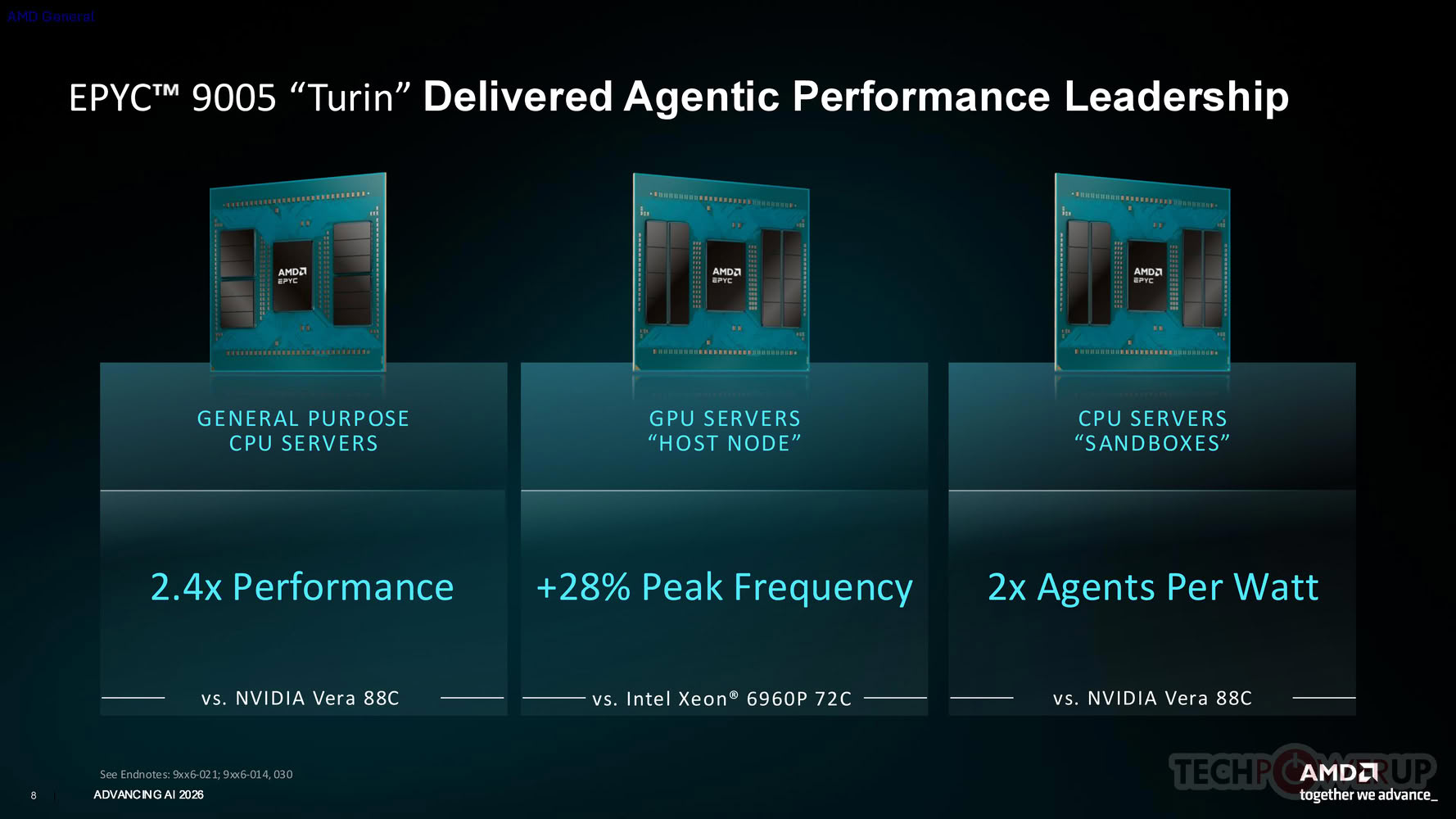
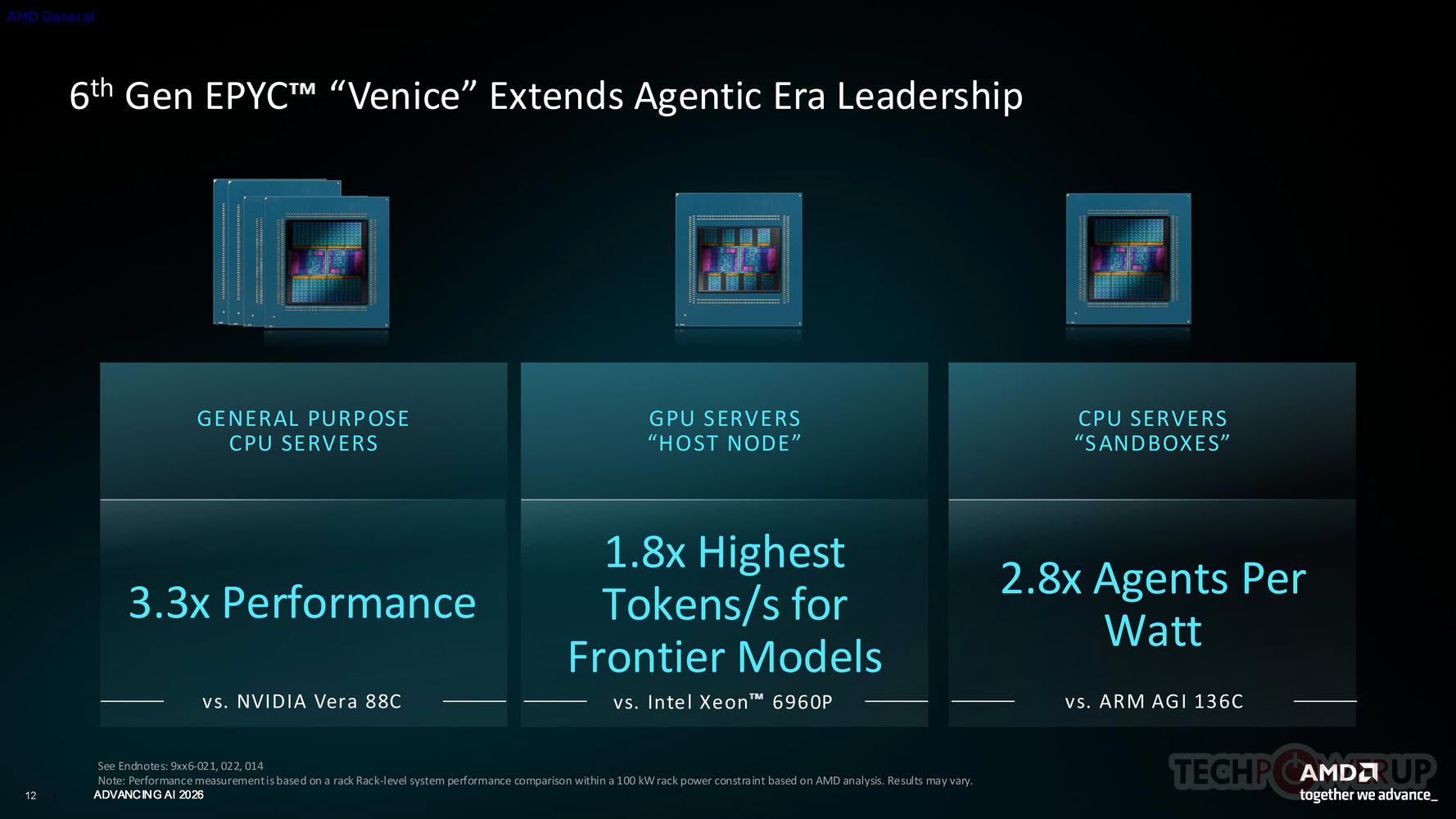
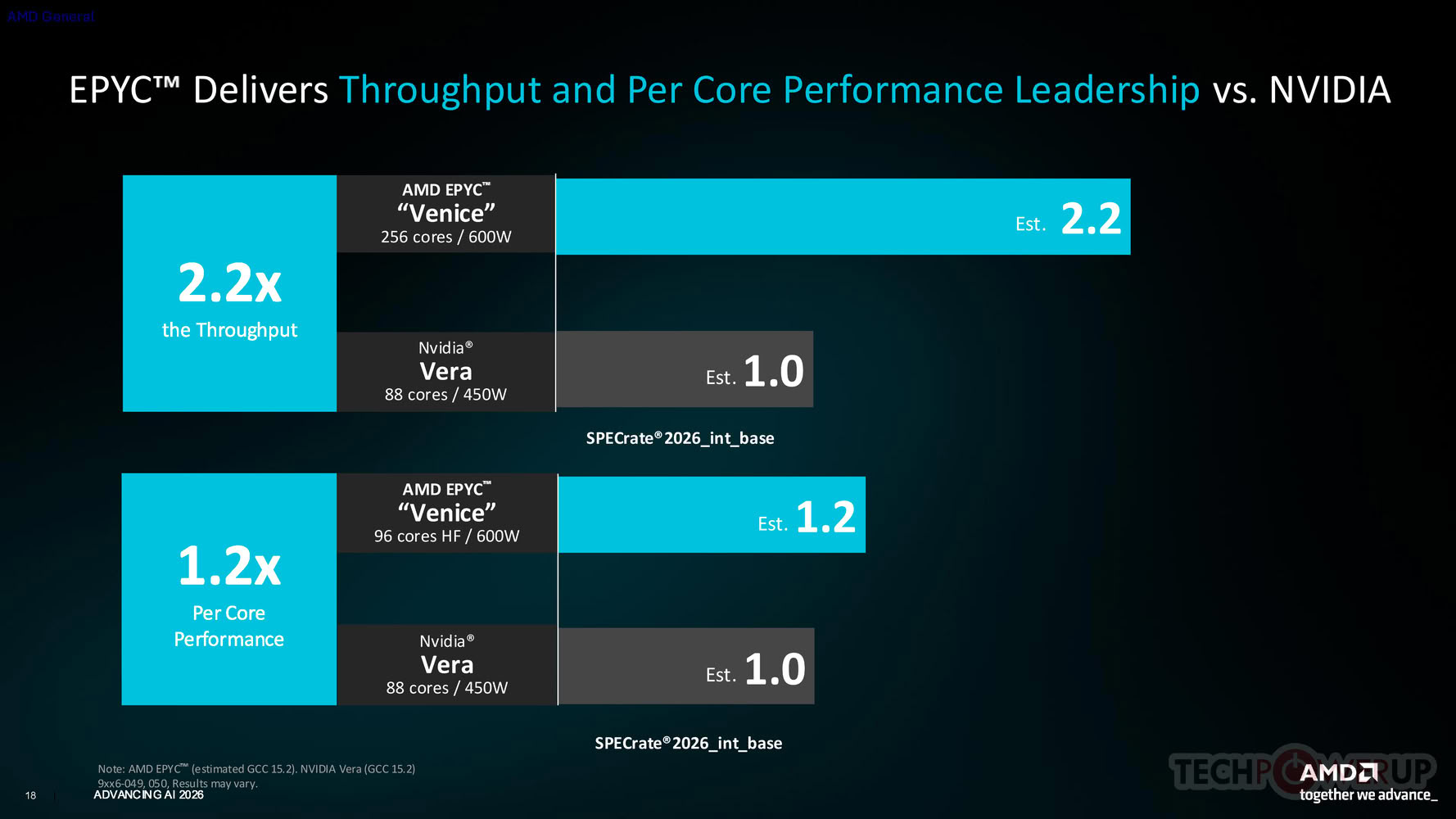
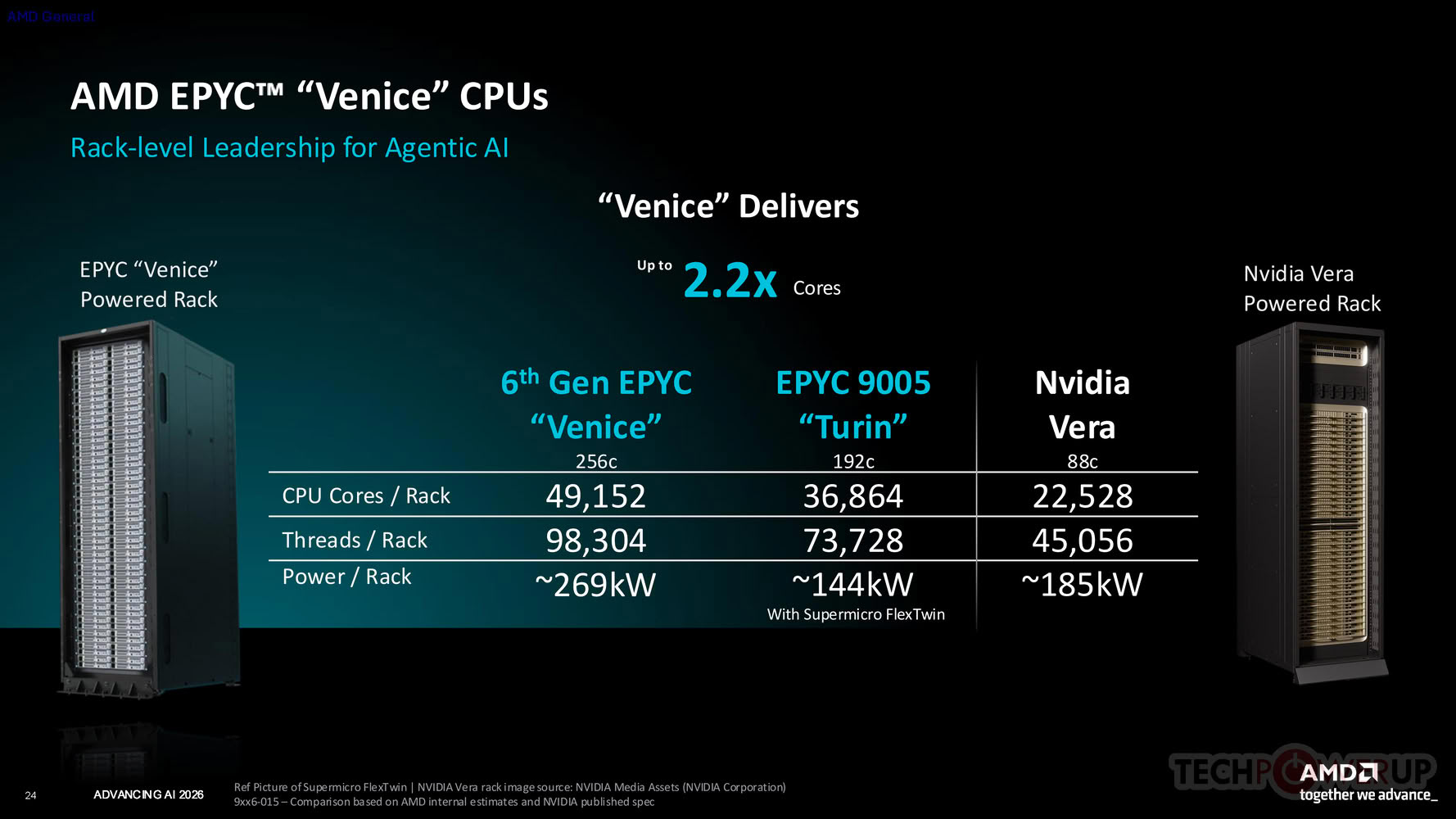
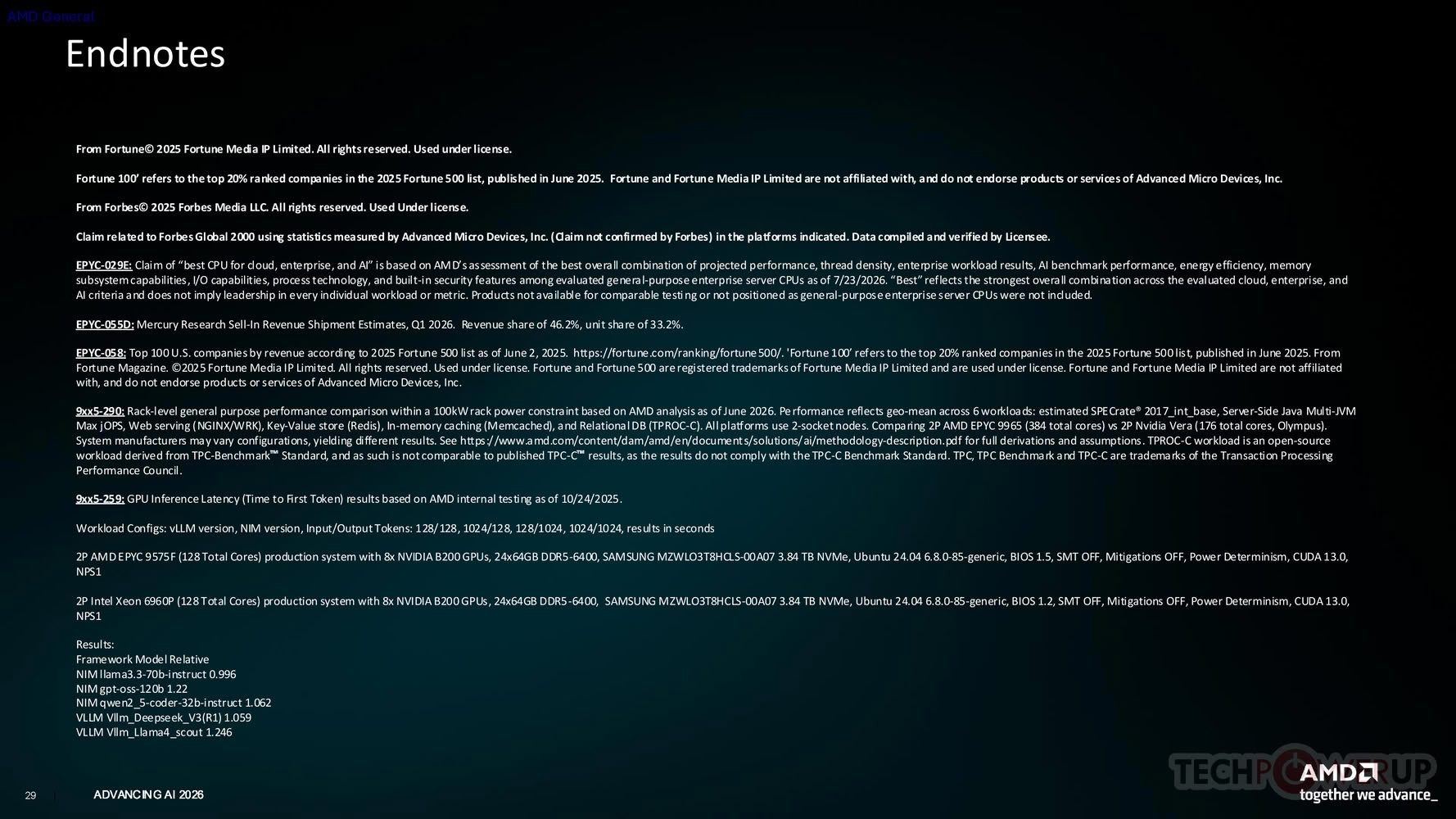
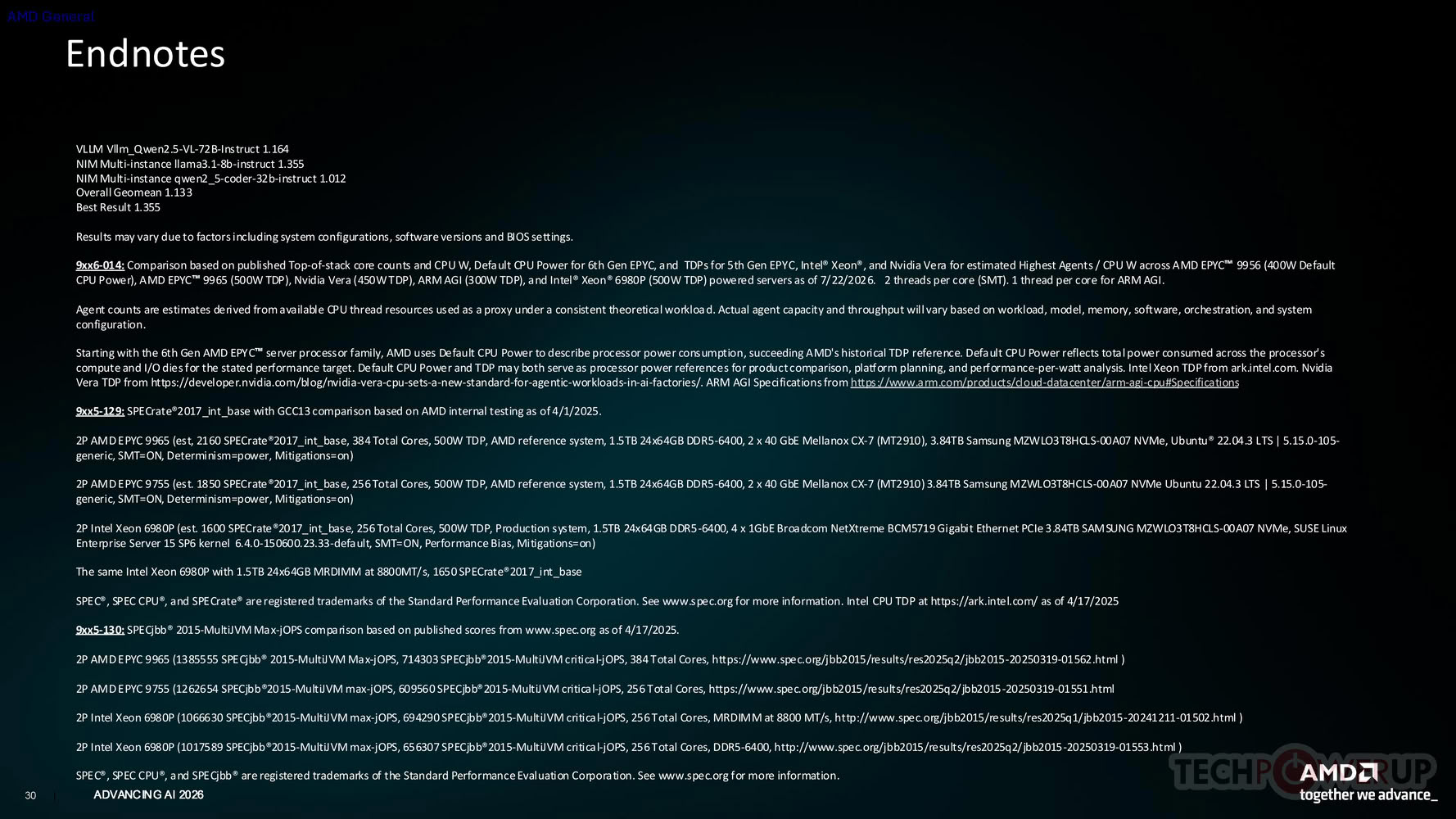
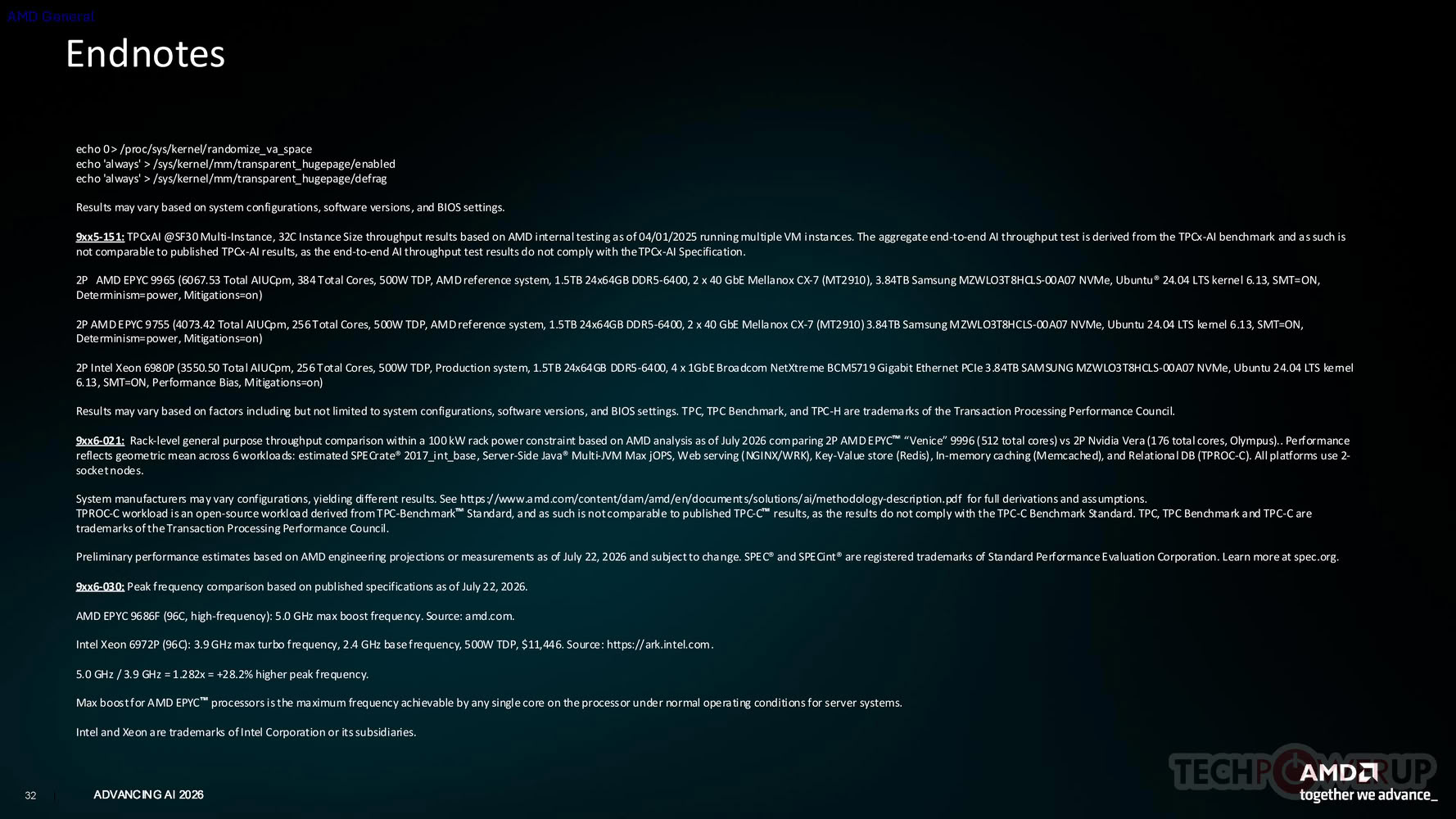
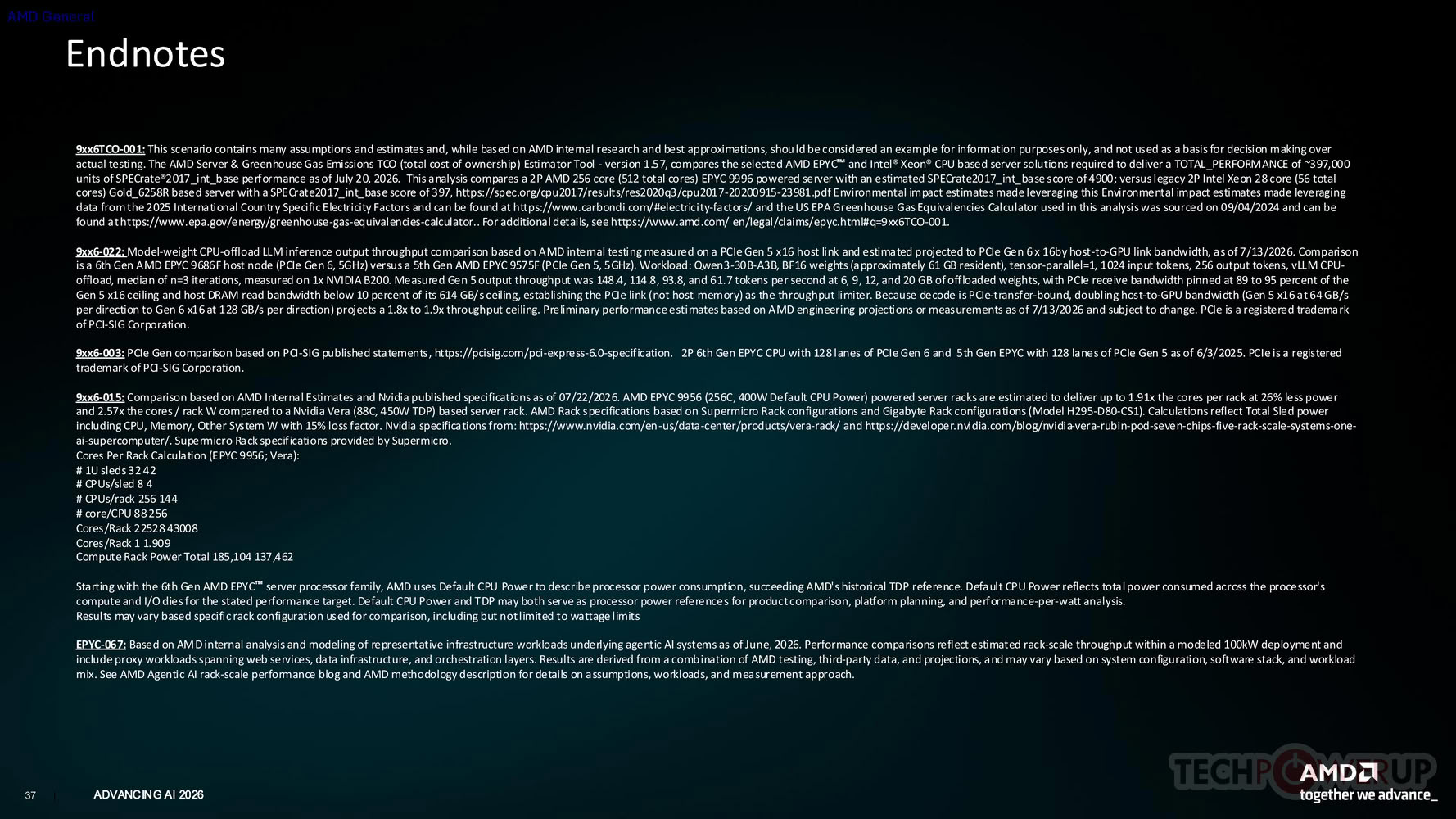
- Against NVIDIA Vera (88C): Up to 2.2x higher throughput on SPECrate 2026_int_base (256C/600W), 1.2x higher per-core performance (96C HF), and up to 2.8x more agents per watt. A Venice-powered rack can deliver up to 2.2x the cores of a Vera-powered rack.
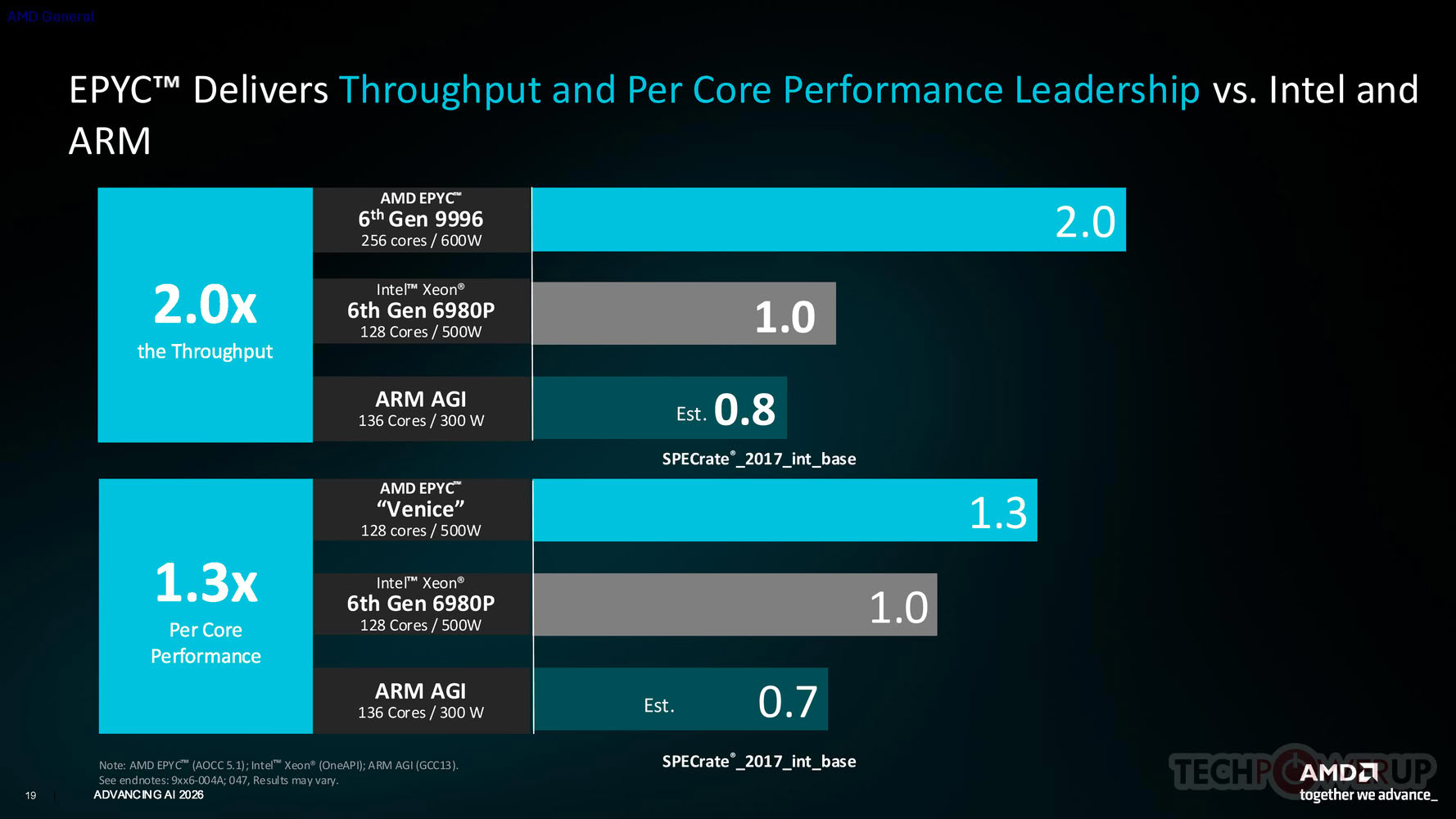
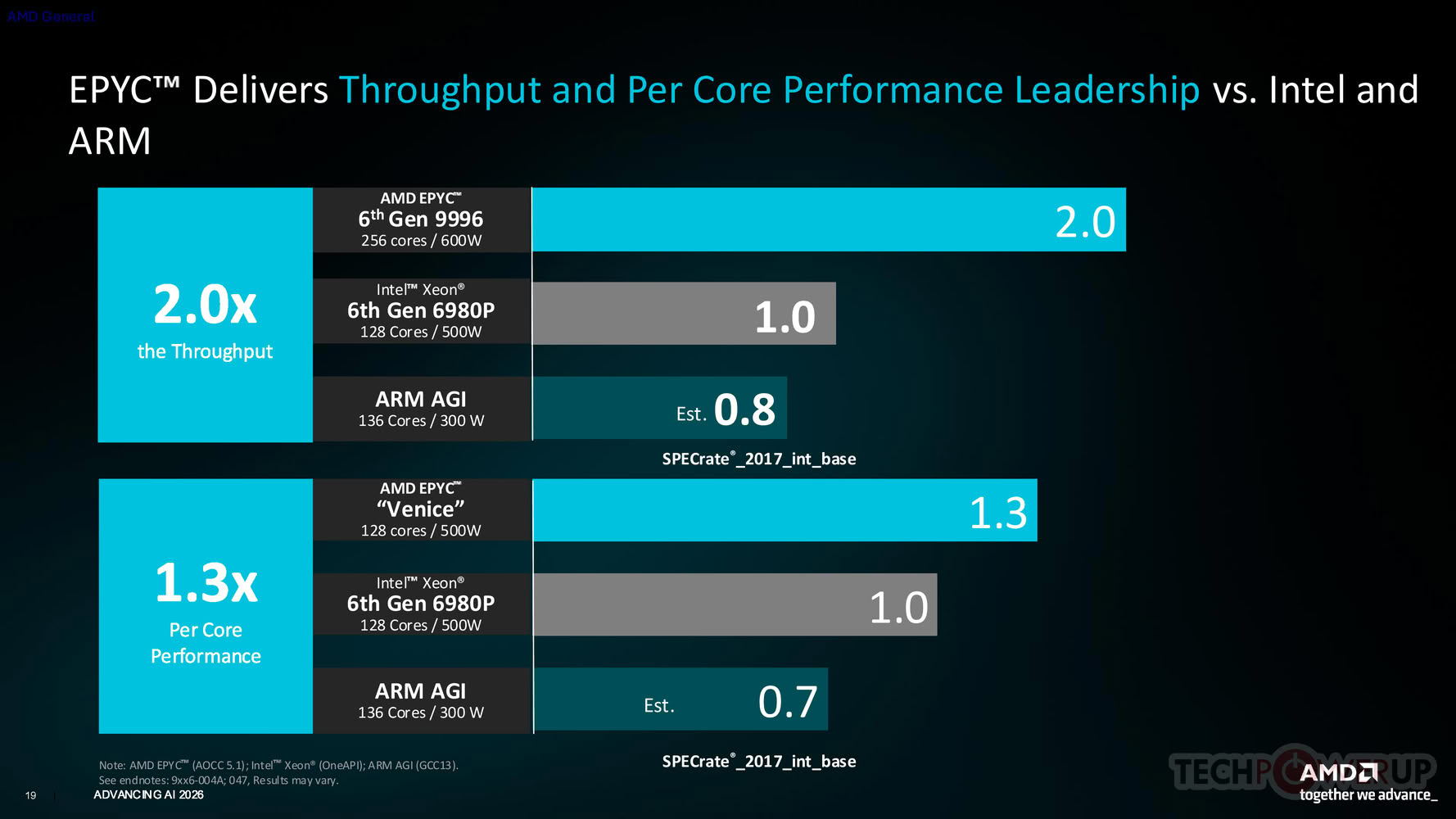
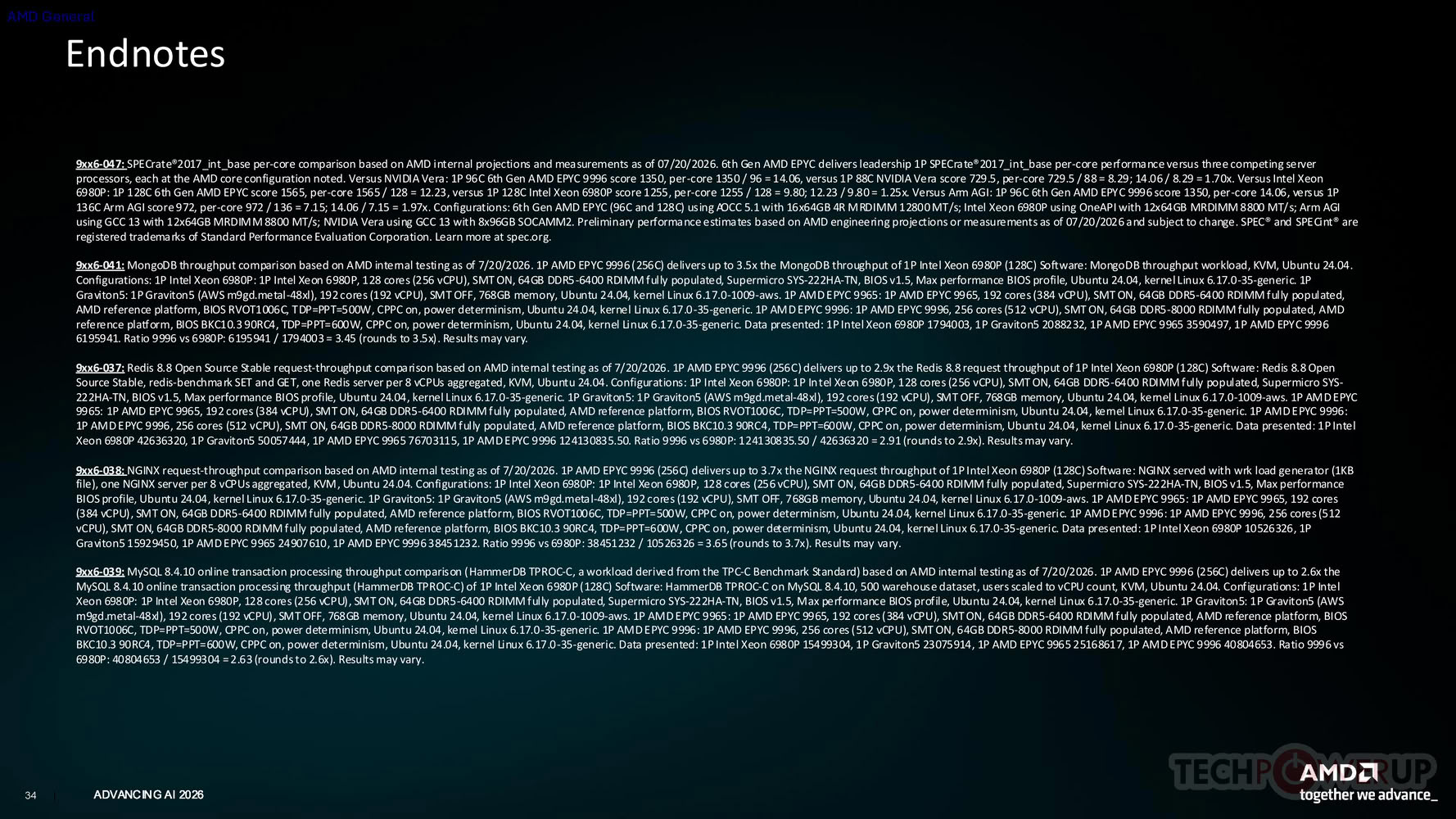
- Against Intel Xeon 6980P (128C): Up to 1.3x higher per-core performance and up to 3.3x better performance in sandbox scenarios.
- Against Arm AGI (136C): Up to 2.0x the throughput on SPECrate 2017_int_base.
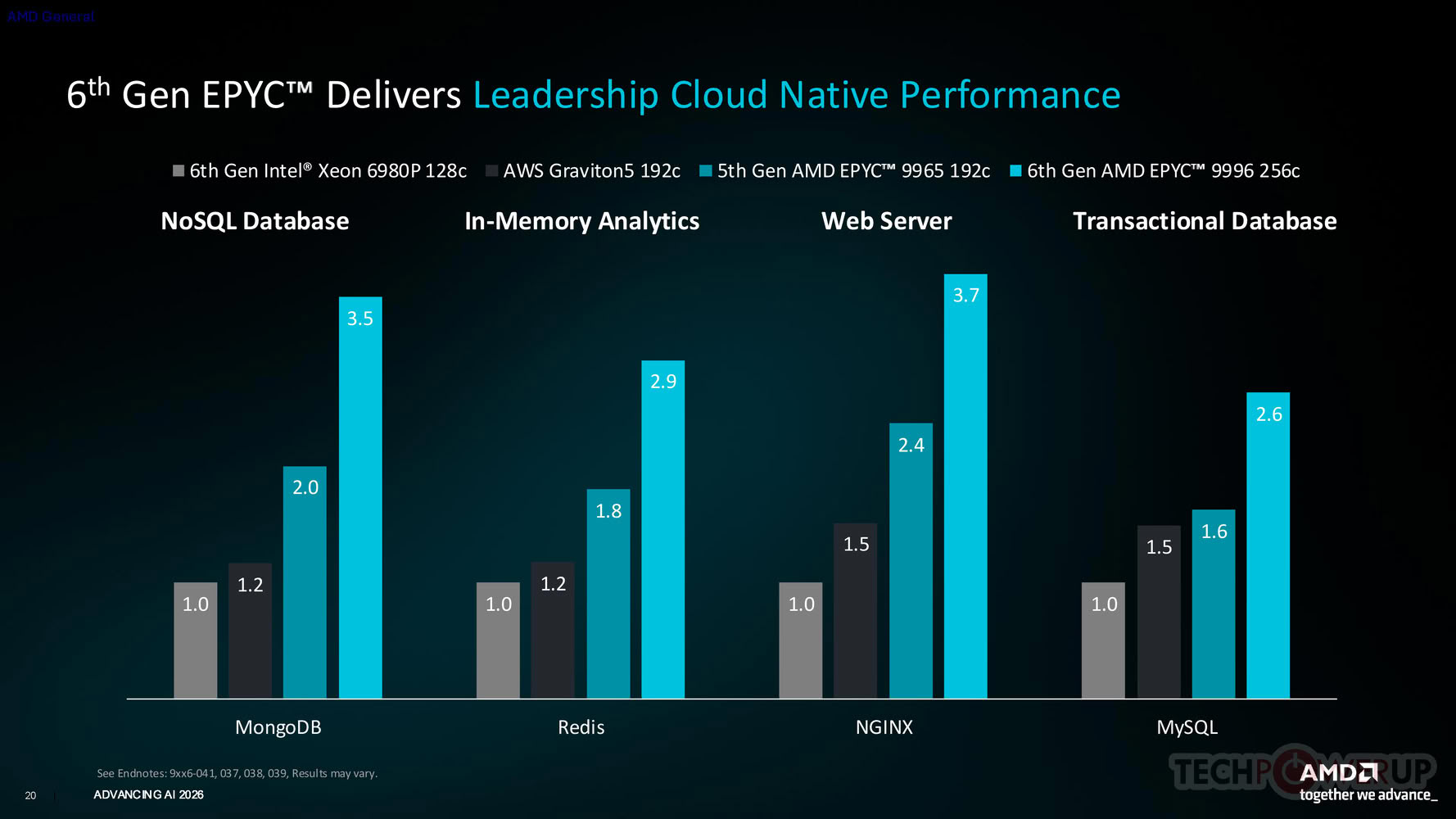
- Cloud-native workloads: Up to 2.6x–3.7x better performance on MongoDB, Redis, NGINX, and MySQL compared to 6th Gen Intel Xeon.
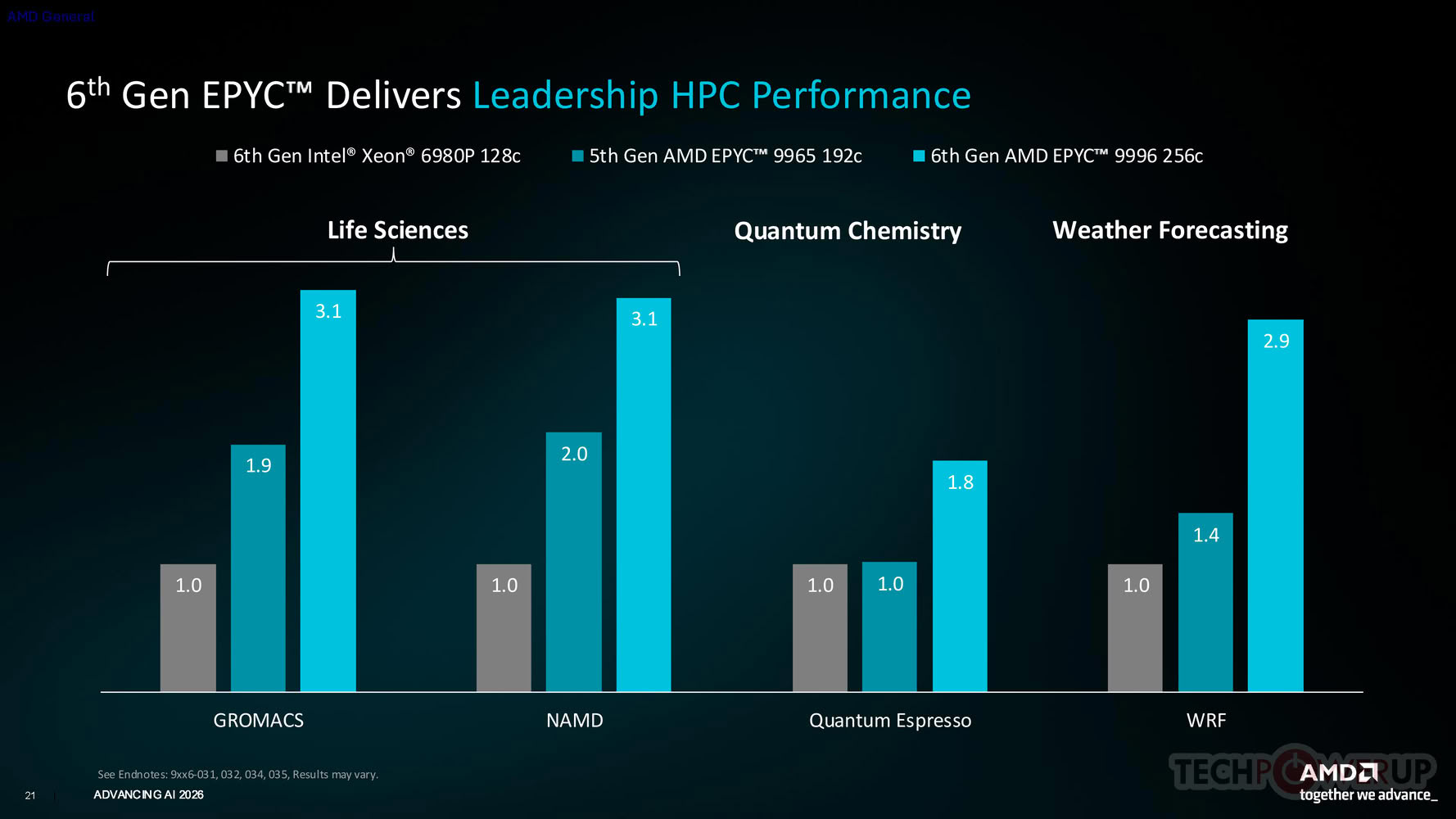
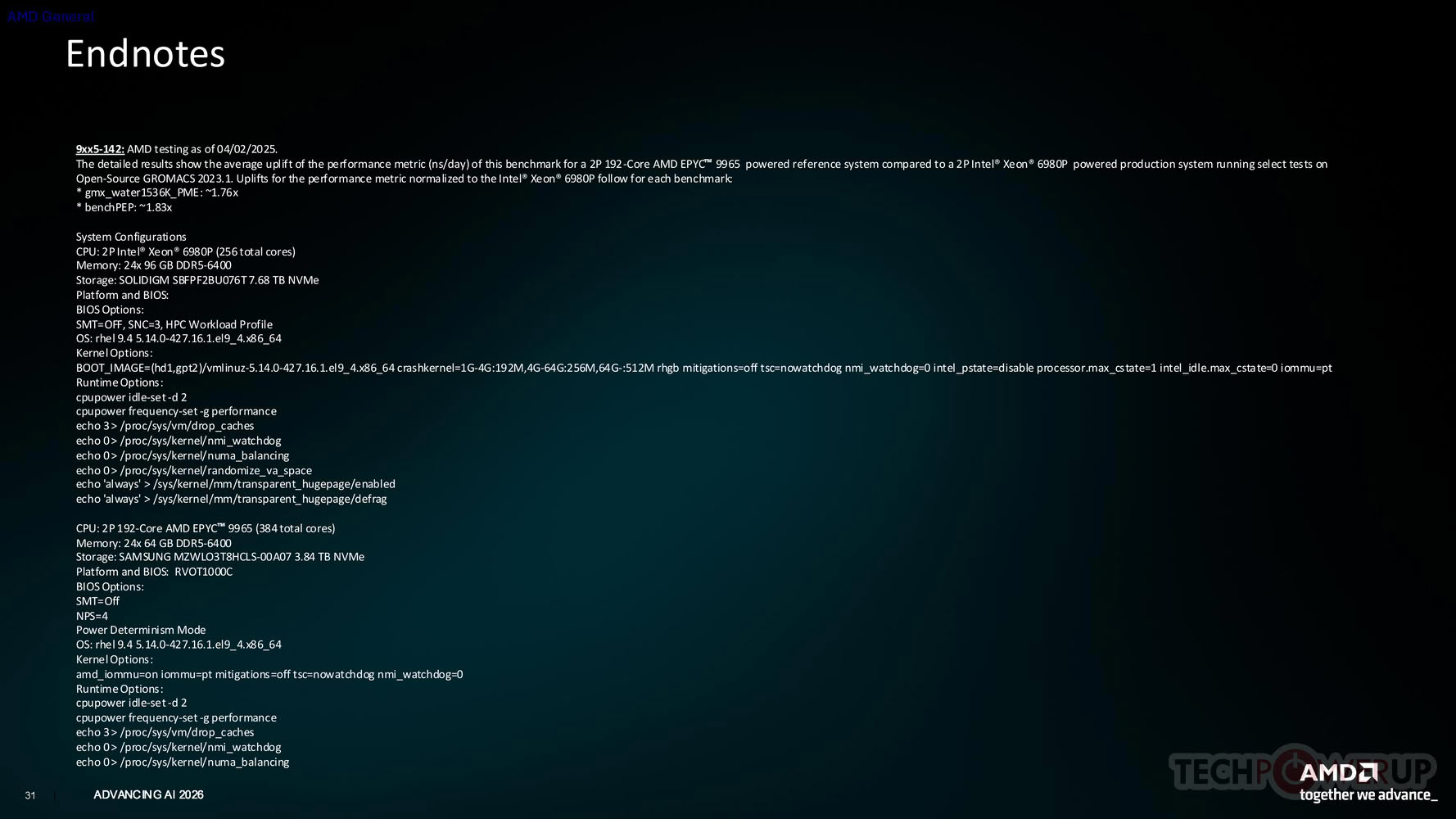
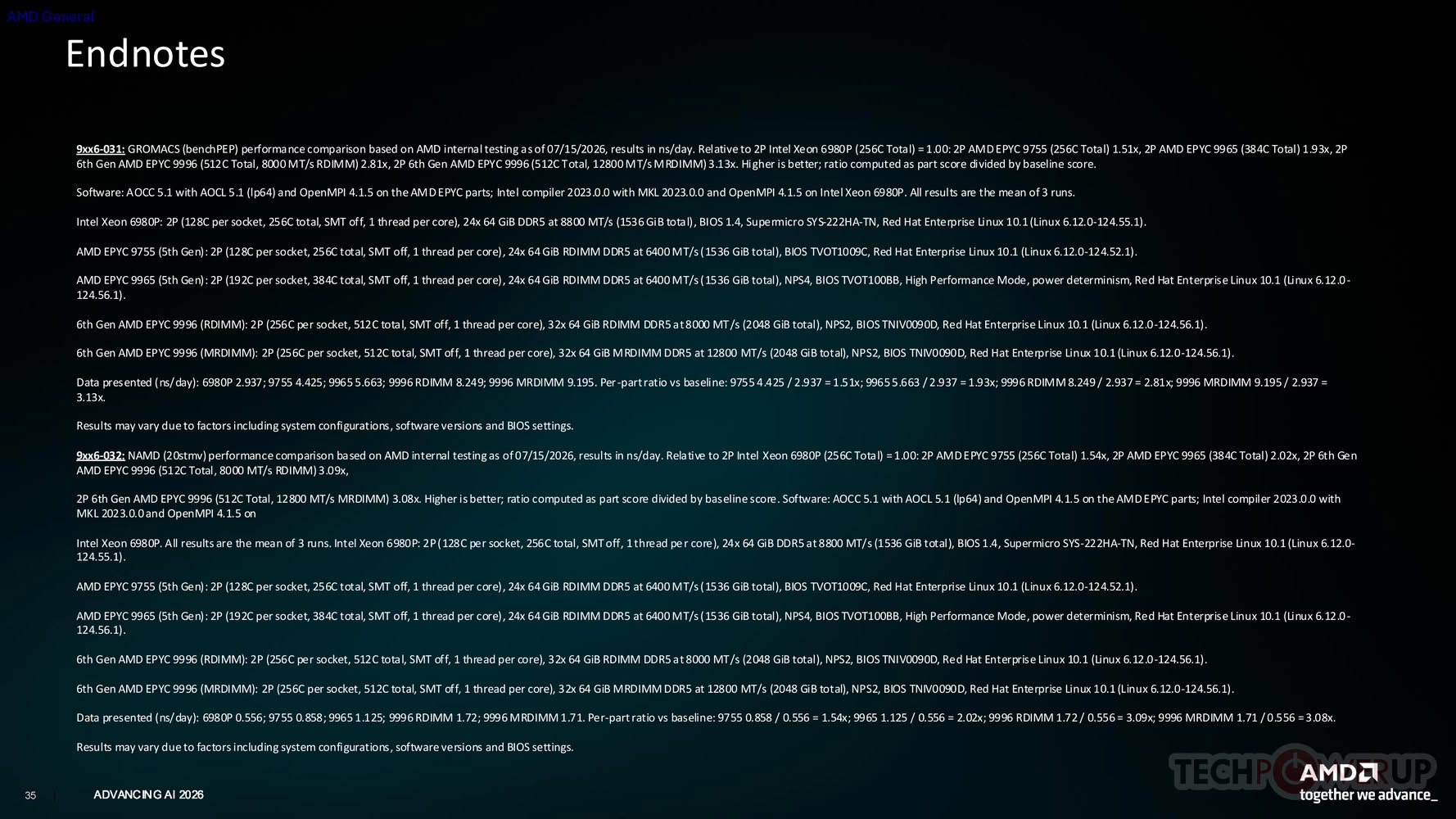
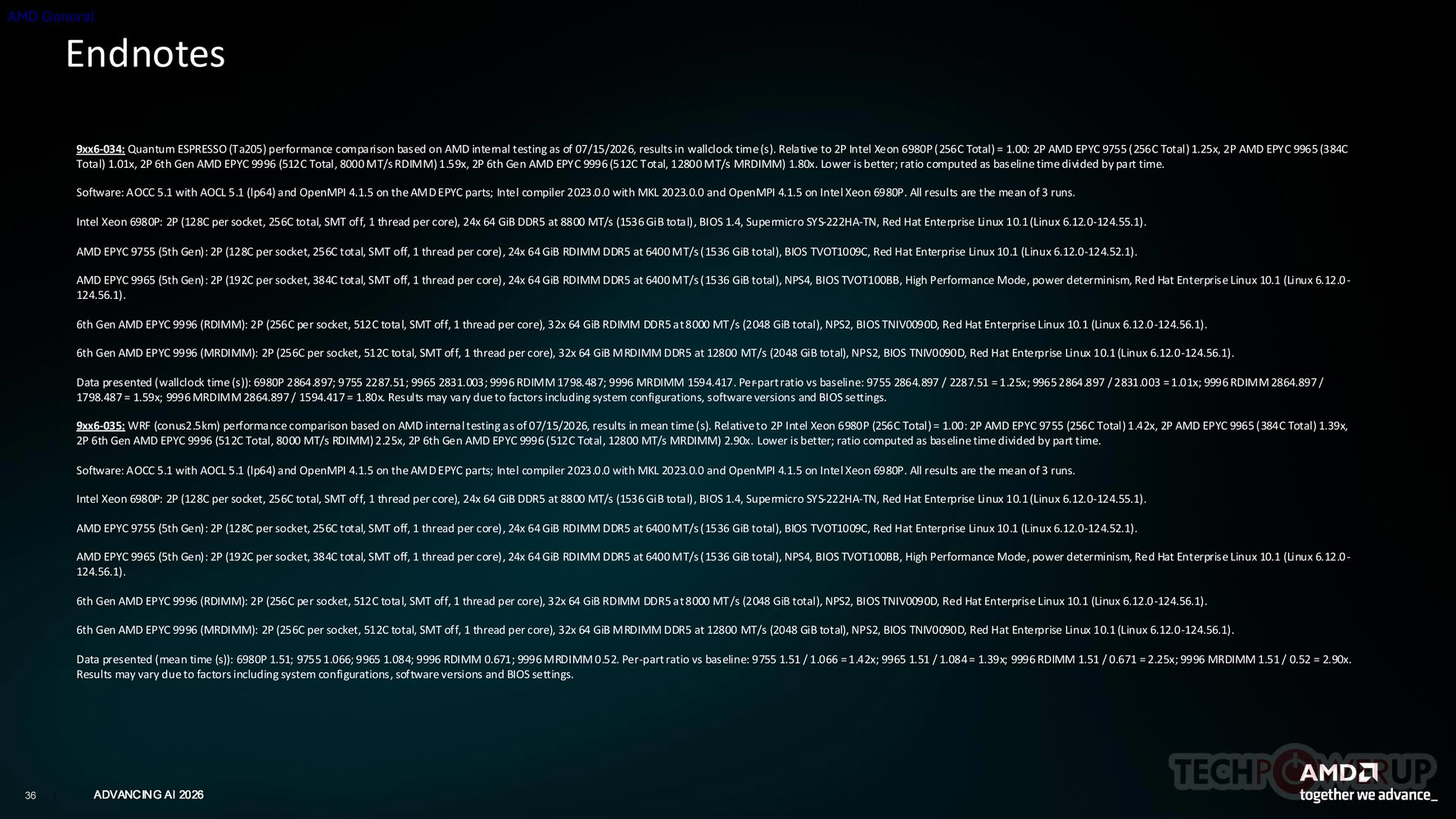
- HPC applications: Up to 3.1x faster on GROMACS, NAMD, Quantum Espresso, and WRF.
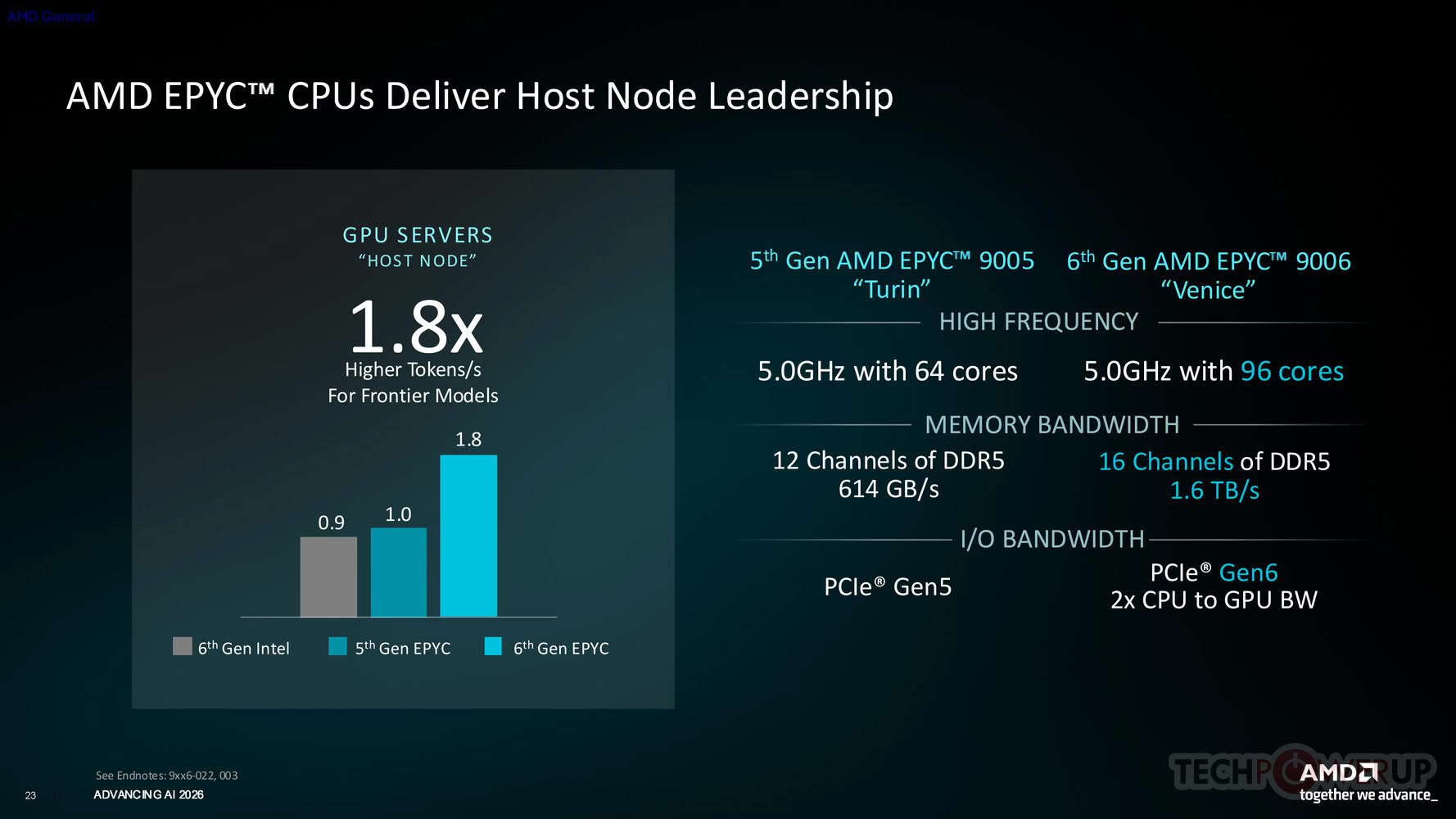
- AI host nodes: 1.8x higher tokens per second for frontier models versus 5th Gen EPYC "Turin," enabled by PCIe Gen 6 doubling CPU-to-GPU bandwidth.
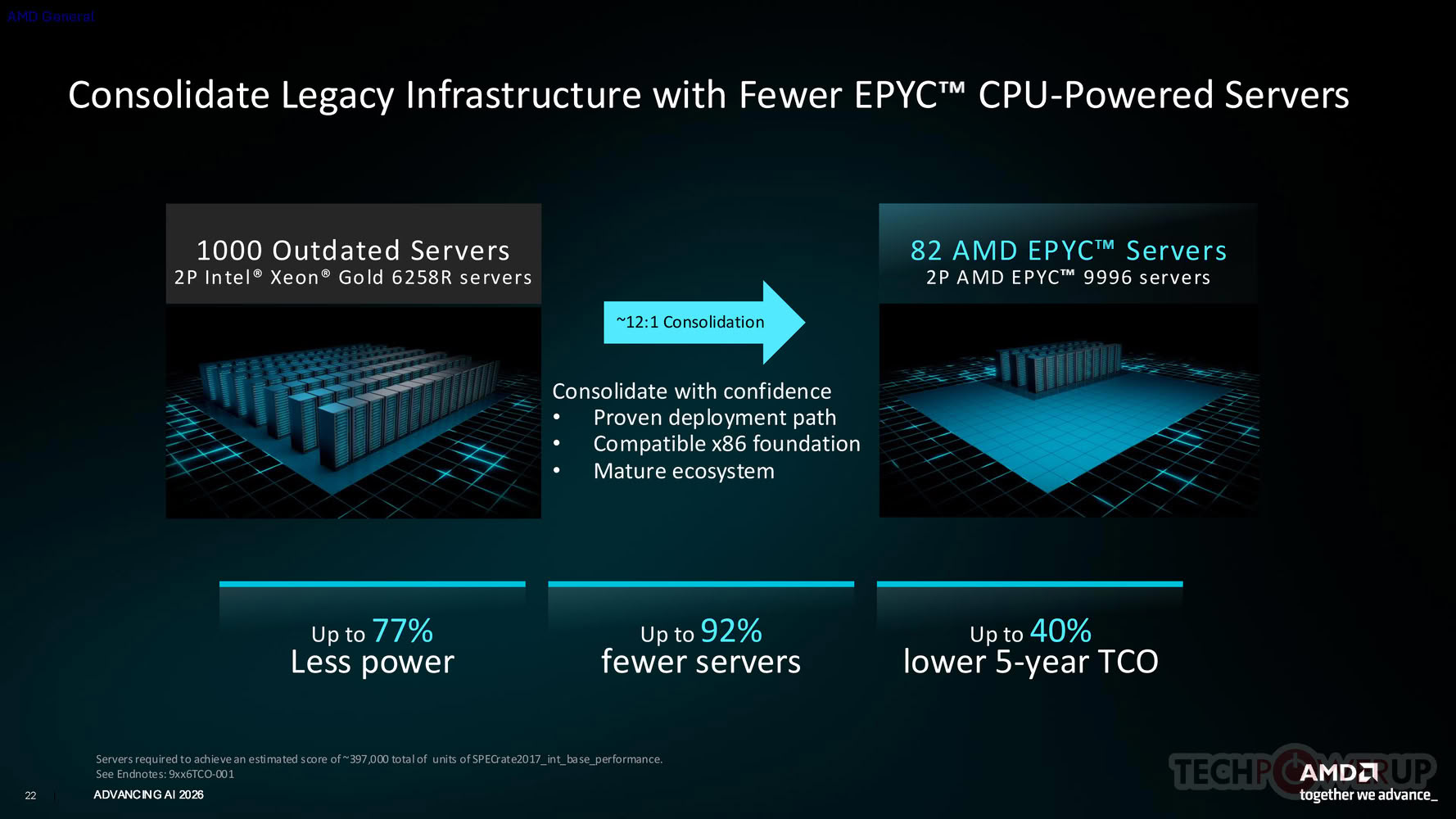
- Server consolidation: AMD claims that 1,000 aging 2P Intel Xeon Gold 6258R servers can be replaced by just 82 2P EPYC 9996 servers, resulting in up to 92% fewer servers, 77% less power consumption, and up to 40% lower five-year total cost of ownership (TCO).
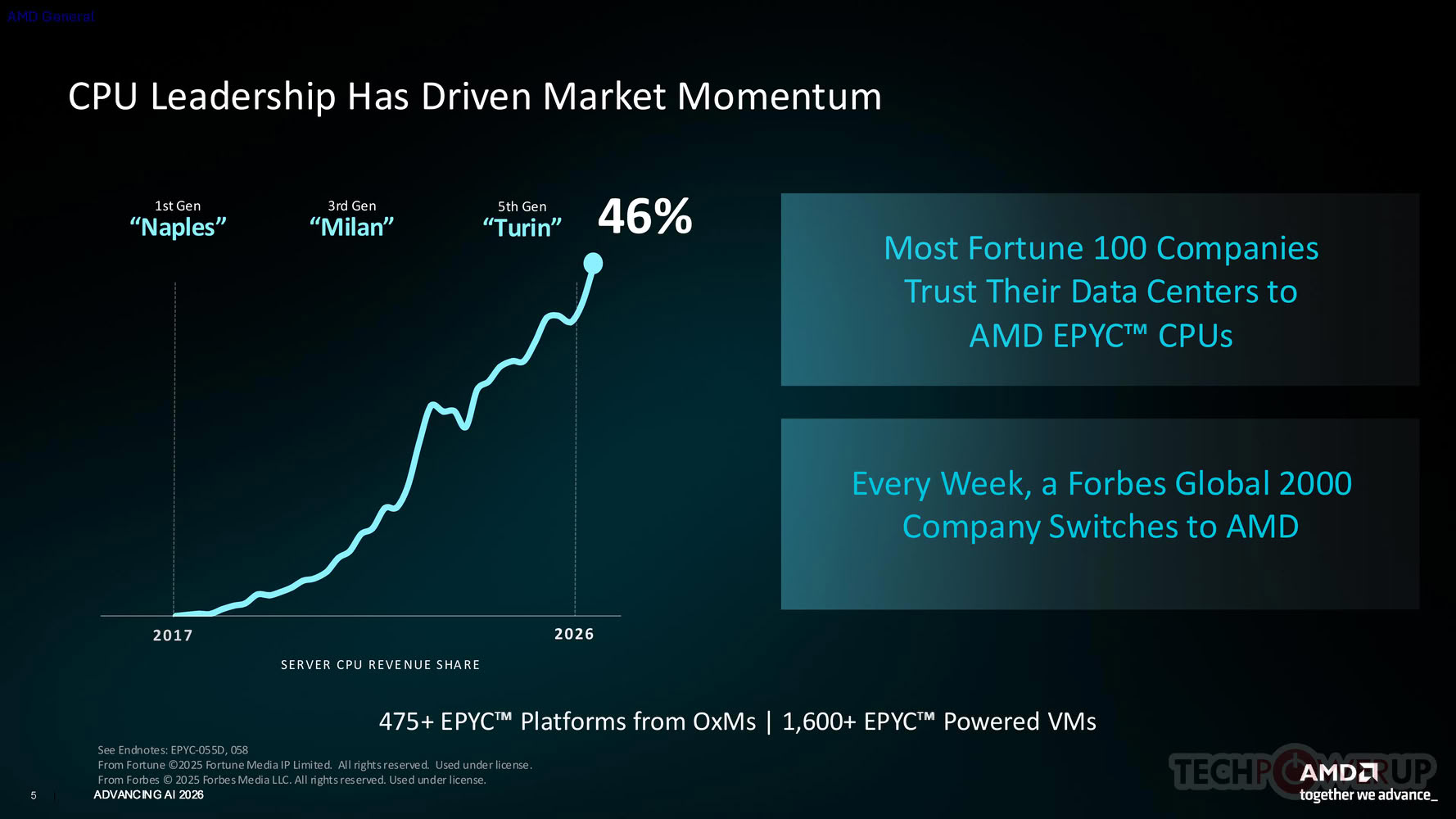
With these advancements, AMD continues to set new standards in server processor performance, efficiency, and security, reinforcing its leadership in the data center market.