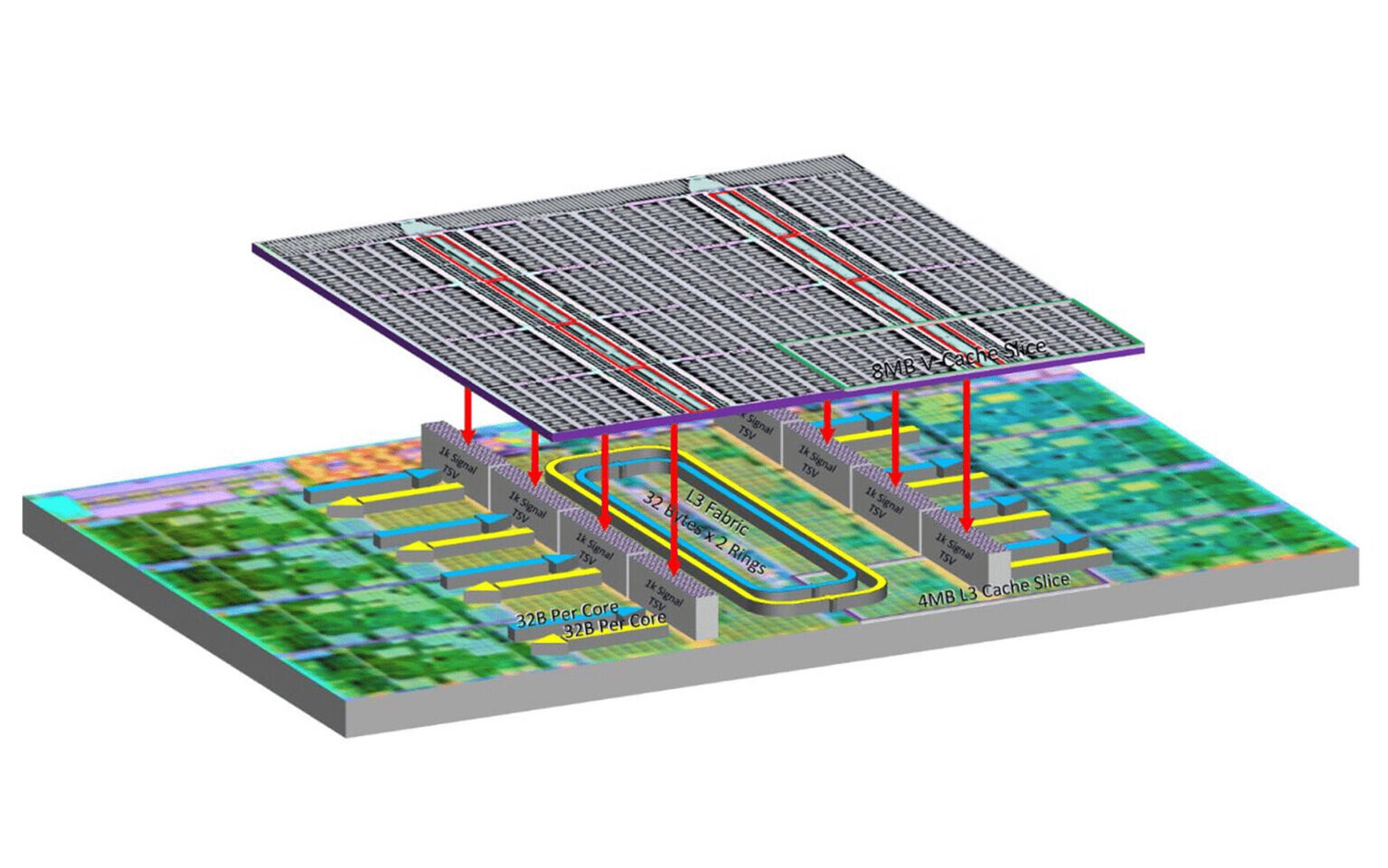
AMD's 3D V-Cache technology incorporates blocks of SRAM that are stacked on top of the CPU logic die, where the CPU cores are located. This allows the processor to access large amounts of cache for applications. Interestingly, it is possible to use this additional level 3 (L3) cache as a RAM disk, where the L3 SRAM behaves like a storage drive. However, it is important to note that this can only be achieved by exposing the L3 to the CrystalDiskMark benchmark, and real-world applications cannot currently utilize it in the same way. According to X/Twitter user Nemez (@GPUsAreMagic), the steps to replicate this process are as follows: acquire an AMD Ryzen CPU with 3D V-Cache, install OSFMount and create a FAT32 formatted RAM disk, and run CrystalDiskMark with specific values set for SEQ 256 KB, Queue Depth 1, Threads 16, and data fill to 0s instead of random.
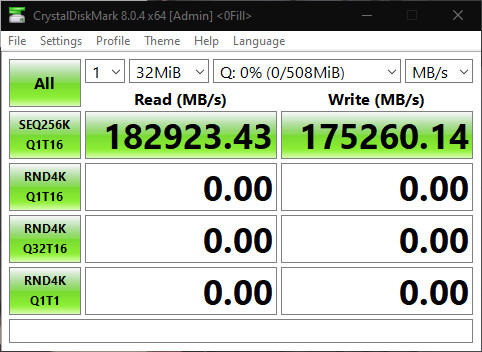
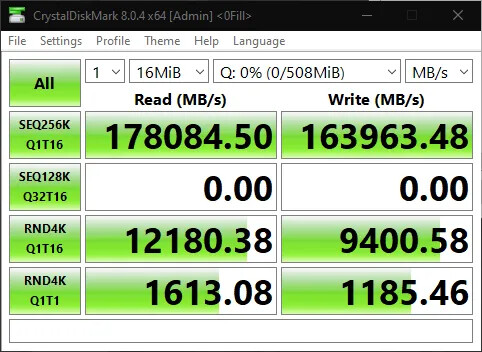
The results of this experiment are quite impressive. The L3 SRAM is small in size but very fast and accessible to the CPU, allowing it to load data locally before accessing the system RAM. With the AMD Ryzen 7 5800X3D, the speeds of this RAM disk reach over 182 GB/s for reading and over 175 GB/s for writing. In another test shared by Albert Thomas (@ultrawide219), a RAM disk based on the AMD Ryzen 7800X3D V-Cache achieved slightly lower scores with over 178 GB/s read and over 163 GB/s write speeds. It is worth noting that CrystalDiskMark only conducted these tests on small allocations ranging from 16 MiB to 32 MiB, so real-world workloads are not yet able to take advantage of this technology.